
Categories
Uncategorized

Children’s Wheelchair Guide: What Every Parent Should Know

Quick Answer: A children’s wheelchair is a mobility device built and fitted specifically for a growing body, not a scaled-down adult chair. The right one depends on the child’s diagnosis, muscle strength, growth stage, and daily environment — home, school, and outdoors. Most families work with an Assistive Technology Professional to match the child to a manual or power base, then customize the seating, so the chair grows with the child for years, not months. 

Children’s Wheelchair Guide: What Every Parent Should Know

Most parents don’t go looking for a kid’s wheelchair. They end up there — after a diagnosis, a hospital stays, or a physical therapist quietly mentioning that walking alone isn’t going to be enough anymore. That moment is heavier than any spec sheet. A children’s wheelchair isn’t just equipment; it’s the thing that gets your child to the birthday party, the classroom, the backyard, on their own terms. Get the fit wrong and it sits in a closet. Get it right, and it becomes almost invisible — just how your kid gets around. This guide breaks down what actually matters when choosing one, from the types available to how funding works, so you’re not learning all of this the hard way. 

How Pediatric Wheelchairs Support Growing Children 

A children’s wheelchair is a mobility base designed around a growing, developing body — smaller frame dimensions, lighter materials, and seating that can be adjusted in stages as the child gets taller and heavier. Adult wheelchairs are built for a body that’s essentially done growing; pediatric chairs are built assuming the opposite. That distinction drives almost every other decision in this guide. 

A child with cerebral palsy, spina bifida, or a neuromuscular condition like muscular dystrophy often needs postural support; an adult chair simply doesn’t offer — trunk support, hip guides, headrests, and seating angles that change as muscle tone changes. This is where a customized power wheelchair built for a child’s specific needs matters, particularly for kids who also need ventilator or oxygen support, is integrated into the base rather than bolted on as an afterthought. 

What Types of Kids Wheelchairs Are Available? 

There isn’t one “children’s wheelchair” — there’s a category, and picking it depends on the child’s strength, cognition, and how independently they can propel or drive. Here’s the breakdown families are usually choosing between: 

Type  Best For  Example 
Manual, lightweight  Kids with good upper-body strength who self-propel  TiLite Aero T 
Folding manual  Families needing easy transport in and out of vehicles  Helio A7 
Power wheelchair  Kids who can’t self-propel long distances or need speed/endurance  Quantum Edge 4 
Power with tilt-in-space  Kids needing pressure relief and postural repositioning  Permobil F5 
Pediatric power base  Younger children needing a smaller, growth-adaptable frame  Permobil M3 
All-terrain power  Active kids needing outdoor and uneven-surface mobility  Track Master S2 

A manual wheelchair is generally lighter, cheaper, and gives the child more physical engagement — which matters for upper-body development. A power wheelchair is the better call when a child’s arms tire quickly, when distances at school are long, or when independence needs to happen now rather than after months of physical therapy. Neither option is objectively “better.” The right one depends entirely on the child sitting in it. 

How Do You Know When a Child Needs a Wheelchair? 

Parents often wait too long, worried that a wheelchair signals giving up on walking. It doesn’t. In most cases, mobility equipment supports development rather than replacing it — a child who conserves energy on wheels for the school day often has more energy left for therapy and play afterward. Watch for these signs: 

  • Your child avoids activities because walking or standing tires them out fast 
  • They’re falling more often, or falls are getting more severe 
  • A physical or occupational therapist has raised mobility as a concern 
  • Long distances (school hallways, grocery stores, playgrounds) leave them exhausted or in pain 
  • Their current mobility device no longer matches their size or needs 

Here’s the thing most people miss early intervention with the right equipment that tends to support better long-term outcomes, not worse ones. Research and clinical guidance summarized in our piece on the benefits of early wheelchair intervention backs this up — delaying mobility support to “encourage walking” can sometimes cost a child more independence, not less. 

A person pushes a child in a wheelchair through a grassy area

What Features Actually Matter in a Children’s Wheelchair? 

This is where a lot of families overspend on the wrong things and underspend on the ones that count. Seating and positioning matter more than most of the flashy features on a spec sheet, because posture affects breathing, digestion, skin health, and even how well a child can use their hands. 

  • Growth adjustability should be non-negotiable. A chair that can’t be resized as your child grows becomes obsolete within a year or two — an expensive mistake most families only make once. Look for adjustable seat depth, width, and back height built into the frame from day one.
     
  • Custom seating is the second priority, especially for kids who spend most of the day seated. A properly fitted seating system — the kind detailed in our custom seating solution for skin health and independence — reduces pressure sore risk and keeps the spine aligned, which matters enormously for kids with limited trunk control.
     
  • Portability and durability round out the list. A chair that folds easily for the car, survives a school hallway five days a week, and holds up outdoors is worth paying for over one that looks sleek but breaks down under real use. 

How Much Does a Kids Wheelchair Cost, and Will Insurance Cover It? 

Custom pediatric wheelchairs typically fall into the Complex Rehab Technology (CRT) category, which usually means higher cost than a standard chair — but also stronger insurance coverage, because CRT is classified as medically necessary rather than optional. Costs vary widely depending on whether the chair is manual or power, and how much custom seating is involved, but most families are not paying full price out of pocket. 

That’s not a small detail — it’s the difference between waiting years and getting equipment within months. Medicaid, private insurance, and state assistance programs each have their own approval process, and navigating it alone is genuinely difficult. Our insurance options page walks through what’s typically covered and how the documentation process works, and the get started page is where most families begin the actual funding request. 

Children’s Wheelchair vs. Adult Wheelchair: What’s the Real Difference? 

A children’s wheelchair is a type of Complex Rehab Technology built specifically for developmental change, while an adult wheelchair assumes a stable, fully grown body. That’s the core distinction, but it plays out in a few concrete ways: 

  • Frame sizing: Pediatric frames adjust increments as the child grows; adult frames are fixed to one body’s size. 
  • Weight and materials: Kids’ chairs, like the Helio A7, prioritize being light enough for a child to self-propel or for a parent to lift into a vehicle. 
  • Seating depth: Pediatric seating systems account for shorter torsos and legs, with more granular adjustment than adult equivalents. 
  • Growth timeline: Most pediatric chairs are designed for 2–4 years of use before a resize or replacement is needed; adult chairs are built for a much longer, stable lifespan. 

This works well for planning purposes, but it breaks down if a family buys an adult chair “to save money long-term.” In practice, an ill-fitting chair costs more in secondary health issues — poor posture, skin breakdown, reduced lung capacity — than the resale value it might preserve. 

A Real Family’s Experience: A Custom Power Wheelchair for a Child with Respiratory Needs 

It helps to see what this looks like in practice, not just in theory. One of our case studies follows a three-year-old who relied on ventilator and suction equipment and, as a result, was largely confined to a crib, with little chance to explore or interact with other kids about his age. Working alongside his care team at Shriners Hospital, we built a multi-powered pediatric power wheelchair with tilt-in-space that could safely carry his respiratory equipment while he moved. Insurance initially denied some of the necessary items, but persistent follow-through got the full setup approved without added out-of-pocket cost to the family. The result was a child who could finally move through his environment on his own, engage with peers, and take part in the kind of everyday exploration that supports development at that age. You can read the full story in our case study on a customized power wheelchair for a child with respiratory needs. 

How Do You Get Started with a Custom Pediatric Wheelchair? 

The process usually starts with an evaluation, not a purchase. An Assistive Technology Professional (ATP), often alongside your child’s physical or occupational therapist, assesses posture, strength, cognition, and daily environment before recommending a base and seating system. From there, insurance documentation gets submitted, the chair gets built to spec, and a fitting appointment fine-tunes everything before your child takes it home. 

If you’re not sure where your child fits in this process, our full range of pediatric mobility services is a reasonable place to start, and our team’s background is outlined on the about us page if you want to know who you’d actually be working with. Most families find it easier to just talk it through — you can reach out directly with your child’s specific situation instead of guessing from a checklist. 

Take the Next Step Toward Better Mobility

If you’re ready to improve daily comfort, independence, and overall quality of life, the Permobil F5 standing wheelchair is a powerful solution.

Frequently Asked Questions 

Q: What is a children’s wheelchair? 
A: A children’s wheelchair is a mobility device built and seated specifically for a growing child’s body, with frame and seating adjustability that a standard adult wheelchair doesn’t offer. 

Q: How do I know if my child needs a power wheelchair instead of a manual one? 
A: If your child tires quickly propelling a manual chair, has limited upper-body strength, or needs to cover long distances independently at school, a power wheelchair like the Quantum Edge 4 is usually the better fit. A therapist evaluation will confirm this. 

Q: How often does a child’s wheelchair need to be resized or replaced? 
A: Most pediatric wheelchairs are designed for roughly 2 to 4 years of use before growth requires a resize or new equipment, though a properly adjustable frame can extend that window. 

Q: Will insurance pay for a custom kid’s wheelchair? 
A: In most cases, yes — custom pediatric wheelchairs fall under Complex Rehab Technology, which typically qualifies coverage through Medicaid or private insurance when documented as medically necessary. Details vary by plan; our insurance options page explains the general process. 

Q: What’s the difference between a children’s wheelchair and an adult wheelchair? 
A: A children’s wheelchair adjusts as the child grows, uses lighter frame materials, and offers more granular seating adjustments, while an adult wheelchair is built for a body that has stopped growing. 

Q: How long does it take to get a custom pediatric wheelchair approved and delivered? 
A: Timelines vary by insurance provider and documentation speed, but the process from evaluation to delivery commonly takes a few months. Starting early, especially with insurance paperwork, shortens the wait considerably. 

Choosing a children’s wheelchair isn’t a one-time decision — it’s the start of an ongoing relationship between your child’s changing body and the equipment meant to keep up with it. Get the fit right early, and you’re not fighting the chair for the next few years; you’re building it. If you’re ready to talk through what your child specifically needs, get started here.
Categories
Uncategorized

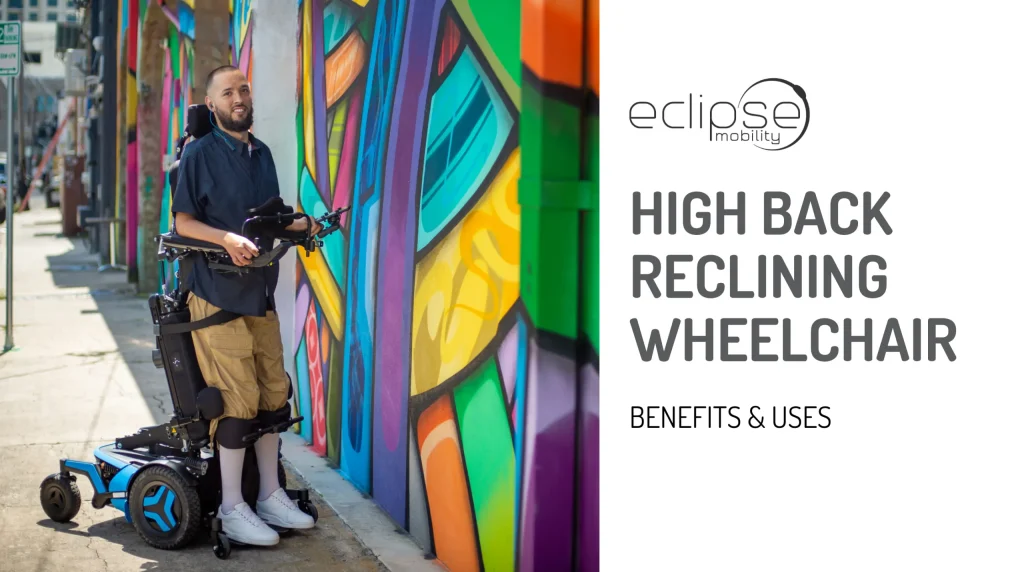
Who Needs a High Back Reclining Wheelchair? Benefits and Uses

Quick Answer: A high back reclining wheelchair is built for people who can’t safely support their own head or trunk for long periods — think spinal cord injuries, ALS, cerebral palsy, or advancing muscular dystrophy. The extended backrest and adjustable recline redistribute pressure, support the airway, and let a caregiver reposition someone without a full transfer.

Who Needs a High Back Reclining Wheelchair? Benefits and Uses

Not every wheelchair user needs the same kind of support. Someone who sits upright with good trunk control does fine in a standard chair. But when a person loses head or trunk stability — from a spinal cord injury, a progressive neuromuscular disease, or a condition present from birth — a high back reclining wheelchair stops being a comfort upgrade and becomes a medical necessity. The extended backrest supports the shoulders and neck, while the recline function shifts weight off the tailbone and hips at set intervals throughout the day. If you’re trying to figure out whether this is the right category for your situation, Eclipse’s Complex Rehab Technology services start with exactly that kind of assessment. 

Who Needs a High Back Reclining Wheelchair? 

The clearest candidates are people with limited or no independent head control — a high back wheelchair with head support is often the deciding feature, not an add-on. This includes individuals with high-level spinal cord injuries, advanced ALS, muscular dystrophy, or cerebral palsy with significant trunk involvement. It also includes people recovering from a stroke with one-sided weakness severe enough to affect sitting balance. In each case, the goal is the same: keep the airway open, keep the spine aligned, and prevent the head from falling forward or to the side during the day. Eclipse’s guide on wheelchairs and independence for people with ALS walks through how these needs typically progress. 

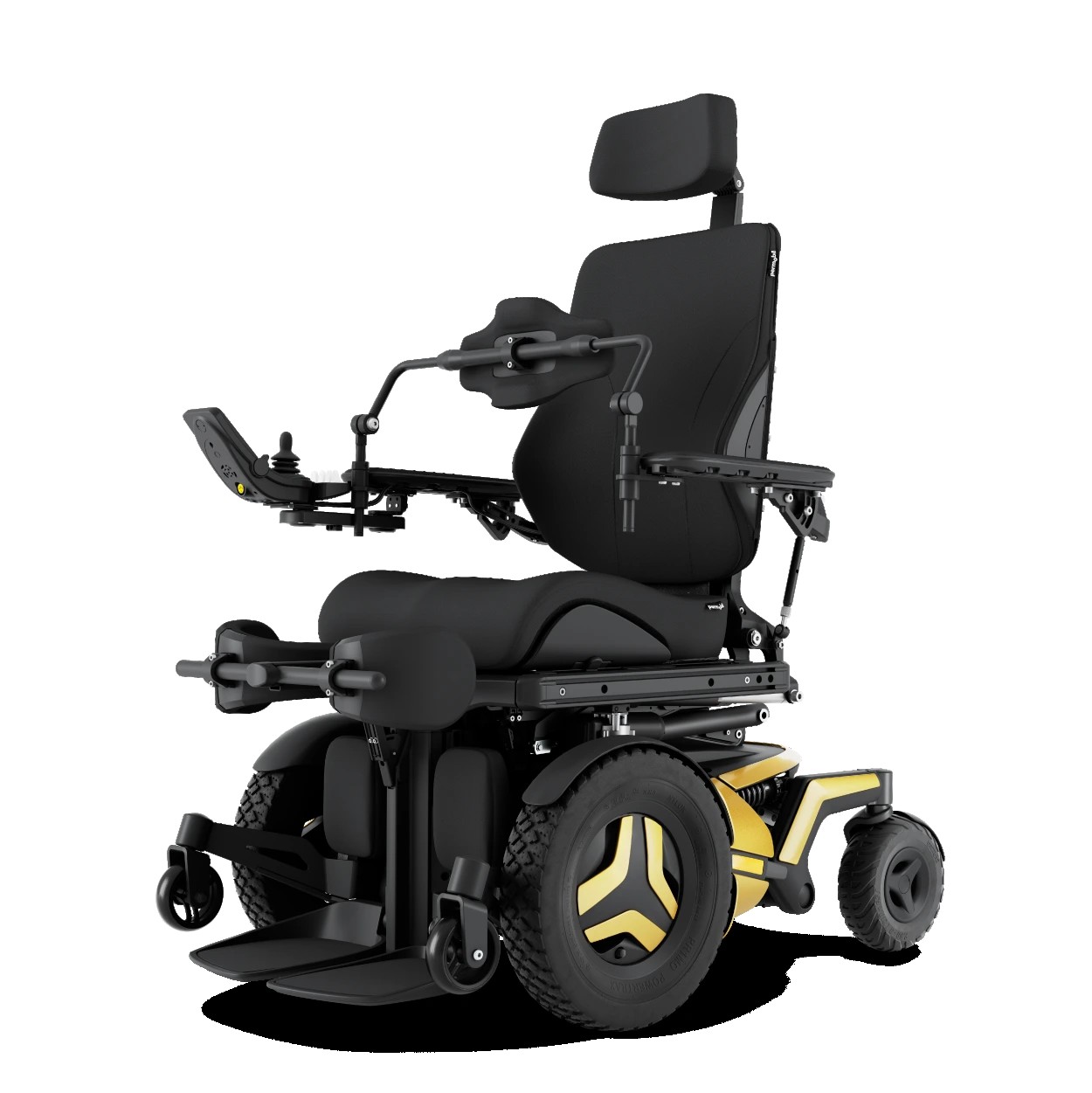
Black and gold standing power wheelchair (F5) in elevated stand-up position.

Why the Reclining Feature Matters? 

A reclining high back wheelchair does more than tilt backward — it opens the hip angle while keeping the seat and back connected, which is different from a tilt-in-space system that keeps the angle fixed and moves the whole seat. Recline is particularly useful for repositioning during personal care, managing orthostatic hypotension, or giving a caregiver a way to shift pressure off the sacrum without a full transfer. If you’re weighing recline against tilt-in-space, Eclipse’s breakdown of tilt-in-space wheelchairs explains when each one is the better fit — and a custom seating consultation through Eclipse’s customized power wheelchair program can settle the question for your specific body and diagnosis. 

Can a Reclining Wheelchair Help Prevent Pressure Sores? 

One of the most overlooked reasons families end up here is skin protection. A person who can’t shift their own weight is at real risk of pressure sores, especially over the sacrum and shoulder blades. Scheduled recline breaks up sustained pressure the same way standing up periodically does for someone without mobility limits. Eclipse’s work on custom seating for skin health and independence is built specifically around this problem, pairing the right cushion with the right recline range instead of treating them as separate decisions. 

Can a High Back Reclining Wheelchair Improve Daily Comfort? 

Comfort isn’t just about feeling better—it directly affects how long someone can safely remain seated. People with limited mobility often spend many hours in their wheelchair every day. Without proper support, they may experience neck fatigue, lower back pain, shoulder strain, and poor posture. 

A high back reclining wheelchair distributes body weight more evenly across the backrest instead of concentrating pressure on a few areas. When paired with an appropriate pressure-relieving cushion, it helps reduce discomfort during meals, work, travel, medical appointments, and social activities. Many users also find that being able to recline throughout the day reduces muscle stiffness and makes it easier to stay seated for longer periods without pain. 

Does Reclining Wheelchair Help with Breathing and Digestion? 

For people managing respiratory weakness — common in ALS, muscular dystrophy, and some spinal cord injuries — a reclined position can also make breathing and swallowing easier by opening the chest and reducing strain on accessory breathing muscles. This is one reason a generic recliner add-on rarely works as well as a chair built around the person from the start. Eclipse’s power chair options, including the Permobil F5 and Quantum Edge 3, both offer power recline paired with head and lateral trunk supports engineered for exactly this kind of need. 

How Do You Get Fitted and Get Insurance to Cover It? 

None of this works well off a shelf. A proper fitting involves an occupational or physical therapist, a CRT supplier, and — in most cases — insurance approval, since these chairs are considered durable for medical equipment. Eclipse’s insurance options page covers what Medicare and private insurers typically require, and their Get Started process walks you through assessment, documentation, and delivery from the first call. If you want to see how this plays out for real families, the Eclipse case studies page has several detailed examples worth reading before you commit to a specific setup. When in doubt, reach out directly — a short conversation usually clarifies more than another hour of research. 

Take the Next Step Toward Better Mobility

If you’re ready to improve daily comfort, independence, and overall quality of life, the Permobil F5 standing wheelchair is a powerful solution.

Frequently Asked Questions 

Q: What is a high back reclining wheelchair? 
A: It’s a wheelchair with an extended backrest that supports the shoulders and neck, combined with a recline function that adjusts the backrest angle for pressure relief and repositioning. 

Q: How is a high back reclining wheelchair different from a tilt-in-space wheelchair? 
A: Recline opens the angle between the seat and backrest while keeping the seat base fixed; tilt-in-space moves the entire seating system as one unit, keeping the hip angle constant. Each suit different postural and medical needs. 

Q: Does a high back wheelchair with head support help with breathing? 
A: In many cases, yes. Reclining and supporting the head and neck can reduce strain on accessory breathing muscles, which matters for conditions like ALS and muscular dystrophy. 

Q: Will insurance cover a reclining high back wheelchair? 
A: Often, yes, when a qualified therapist documents medical necessity. Coverage details vary by plan, so checking with a CRT supplier and your insurer early in the process avoids delays. 

Q: How long does it take to get fitted for one? 
A: From initial assessment to delivery, the process typically takes a few weeks to a couple of months, depending on insurance approval timelines and any custom fabrication needed. 

Categories
Uncategorized

Choosing a Wheelchair After a Stroke: A Complete Guide

Quick Answer: Choosing the right wheelchair after a stroke depends on the survivor’s strength, balance, and mobility needs. Manual wheelchairs suit those with good upper body strength, while power wheelchairs help when strength is limited. Reclining or tilt-in-space chairs support trunk stability and reduce pressure sores. Look for adjustable armrests, low seat height, and ergonomic cushions, and consult a physical or occupational therapist for personalized recommendations.

Recovery after a stroke rarely follows a straight path. There are setbacks. There are small wins. And there’s a constant back-and-forth of figuring out what works. One thing that makes a real difference along the way is mobility support specifically, finding a wheelchair that doesn’t feel like a limitation but actually opens things back up. 

Here’s the thing though: wheelchairs aren’t interchangeable. A chair built for someone with strength on one side of their body won’t suit someone who needs help with posture or trunk balance. Some models even climb stairs now. 

So, let’s get into it the different wheelchair types out there, which features actually matter, what professionals recommend, and a few practical things worth knowing before you buy. 

Understanding Stroke and Mobility Challenges

When a stroke happens, blood flow to part of the brain gets cut off, and the tissue there gets damaged. Often, that damage shows up as weakness or paralysis on one side of the body doctors call this hemiplegia. Balance goes. Coordination suffers. Moving around safely becomes harder than it used to be. 

That’s the reason so many stroke survivors end up relying on a wheelchair or other assistive equipment. Not just to get from room to room, but to actually stay safe and keep participating in daily life. 

Why the Right Stroke Wheelchair Matters

This isn’t only about transportation. A wheelchair chosen well can do a lot: 

  • Improve posture and comfort 
  • Lower the risk of pressure sores 
  • Make transfers safer, with fewer falls 
  • Keep someone engaged in day-to-day activities 
  • Support better results during rehab 

Pick the wrong one, though, and you end up with discomfort, frustration, sometimes even a slower recovery. That’s reason enough to take the decision seriously.

Eclipse GIF

Types of Wheelchairs for Stroke Survivors

Manual Wheelchairs

If a stroke survivor still has decent strength in their arms and upper body, a manual wheelchair is usually the first thing tried. There’s some range here: 

Lightweight frames, or the standard heavier build
Self-propelled versions with larger back wheels
Chairs with flip-back armrests and swing-away footrests, which make transfers a lot less awkward 

Then there are hemi wheelchairs built for people with one-sided weakness. Think one-arm drive systems, a lower seat so the user can push with their feet, or controls set up entirely on the stronger side. 

Power (Electric) Wheelchairs

When someone doesn’t have much upper body strength left to work with, a power wheelchair often becomes the better option. 

A few things they typically offer: 

Control through a joystick, head movement, or even a phone app
Seating that’s customizable, plus built-in pressure relief for comfort
Occasionally, more advanced features the Scewo BRO, for instance, can climb stairs, and some models offer programmable support for weak trunk stability 

For a lot of people, this is what actually gets independence back. 

Reclining and Tilt-in-Space Chairs

Not everyone struggles with arm strength, some survivors have trouble simply staying balanced while seated. That’s where reclining and tilt-in-space chairs come in. 

These let the backrest recline, or tilt the whole seat, which: 

  • Shifts pressure around and cuts the risk of sores
  • Reduces fatigue over long stretches of sitting
  • Helps maintain better posture generally 

Key Features to Consider

A few things worth paying attention to while shopping:

  • Adjustable armrests and footrests – makes transfers easier, accommodates different body positions 
  • Low seat height – useful for foot propulsion, especially with hemiplegia 
  • Ergonomic cushions and backrests – better posture, pressure spread more evenly, more comfort overall 
  • Lightweight, foldable frames – easier to store, easier to travel with 
  • Antibacterial or pressure-relieving cushions – protects skin, helps prevent sores 
  • Customization – one-hand drive systems, added accessories, adaptive controls 

Don’t Go It Alone: Work with Professionals

Physical and occupational therapists know this territory well, and leaning on them is worth it. They’ll typically: 

Point toward specific models or modifications that fit the person’s needs
Walk users through safe transfers, propulsion technique, basic upkeep
Check back in as recovery progresses and suggest changes or upgrades when needed 

Skipping this step tends to cost more time and money in the long run — not less. 

Practical Tips for Stroke Wheelchair Users and Families

Lock the brakes every single time before getting in or out — no exceptions
Swing the footrests away (or take them off) during transfers
Use a transfer board or gait belt when extra safety is needed
Rework the home a bit ramps, wider doorways, pathways clear of clutter
Stay on top of maintenance: tires, brakes, moving parts, checked regularly 

Final Thoughts

Choosing a wheelchair for a stroke patient isn’t just about mobility. It’s about getting back a sense of confidence and freedom. Take time to explore the options. Talk to the professionals involved. Invest in the features that will actually matter day to day. 

The road to recovery might be long — but the right wheelchair turns a lot of those obstacles into something more manageable. 

Ready to find the right wheelchair for a stroke patient? Talk to Eclipse Mobility today and let us help you choose comfort, safety, and independence.

Find Your Perfect Wheelchair for Comfort & Mobility

Whether you need customized comfort or easy travel, discover the wheelchair that supports your independence every day.

FAQs 

(1) How long does it take to regain movement after a stroke?
There’s no single timeline, it depends on the person. Some survivors notice movement coming back within weeks. For others, it takes months, sometimes years. Either way, a wheelchair often plays a key role in staying mobile through that whole stretch. 

(2) How is a stroke wheelchair different from a regular wheelchair?
It usually comes down to hemiplegia-specific features, one-arm drive systems, lower seats built for foot propulsion, flip-back armrests for smoother transfers. Small design choices, but they change daily mobility quite a bit. 

(3) Do all stroke patients need wheelchairs?
No, not everyone. But plenty of survivors use one, whether short-term during recovery or long-term depending on how their mobility settles. It helps with independence, cuts down fall risk, and just makes daily life more workable. 

(4) Can stroke wheelchairs be customized?
Yes, ergonomic cushions, adjustable armrests, one-handed controls, pressure-relief seating, all of it can typically be added or adjusted. That customization is often what makes a chair genuinely usable over the long haul.

Categories
Uncategorized

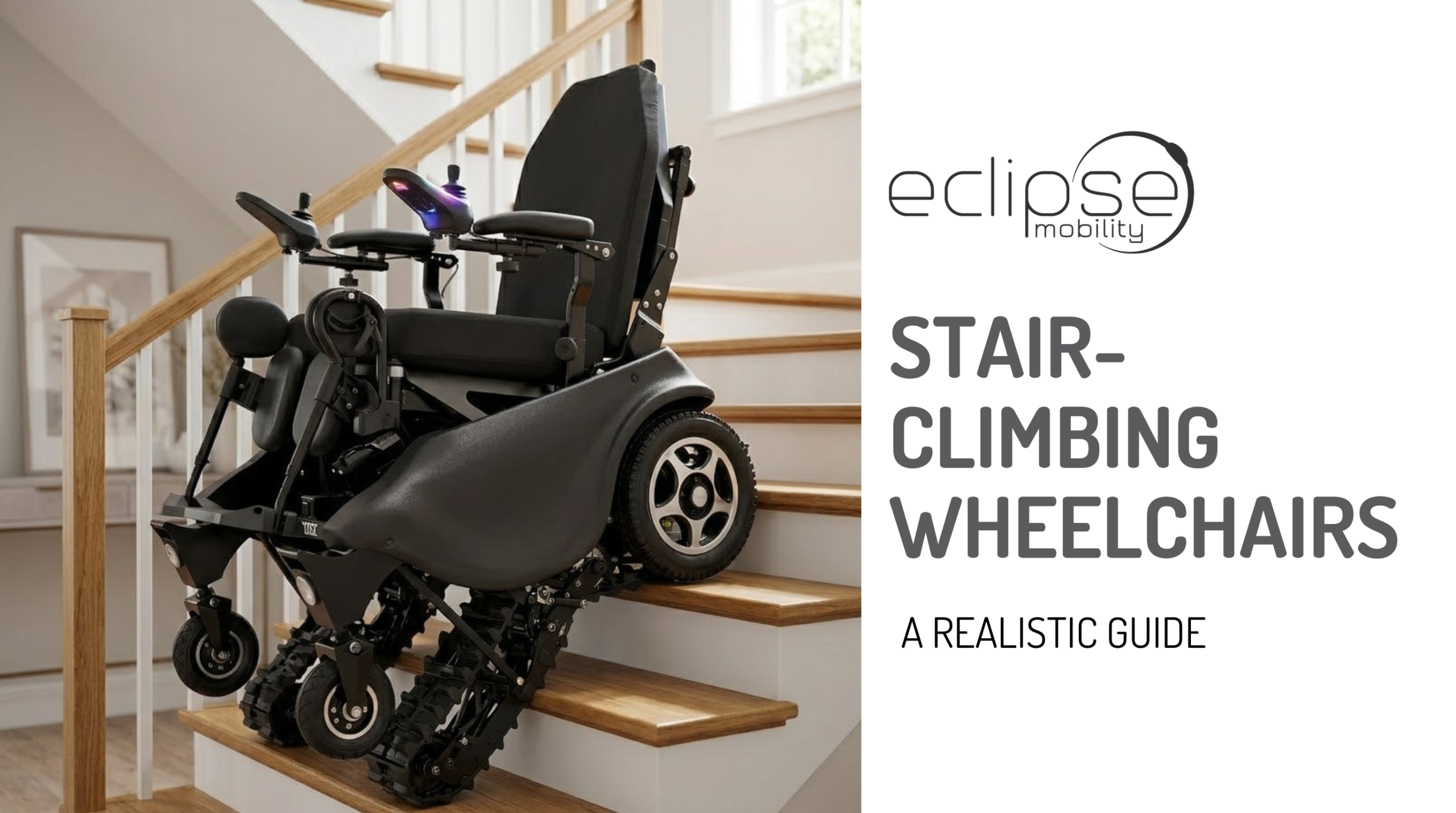
Motorized Stair Climbing Wheelchair: What It Is and Whether You Actually Need One

Motorized Stair Climbing Wheelchair: What It Is and Whether You Actually Need One

Quick Answer: A motorized stair climbing wheelchair is a power wheelchair built with tracked or multi-wheel systems that let a user go up and down stairs without a ramp or lift. These chairs are niche, expensive, and rarely covered by insurance. For most people, a well-fitted custom power wheelchair paired with home accessibility changes solves the same problem more reliably. 

Stairs are the single biggest barrier standing between a wheelchair user and full independence. If you’ve ever watched someone struggle to plan a trip around which buildings have ramped, you already understand why the idea of a wheelchair stair climber sounds like the perfect fix. It promises freedom from that plan — no more calling ahead, no more back entrances. 

Here’s the thing most people miss: an electric stair climbing wheelchair and a standard power wheelchair solve overlapping but different problems. One is designed to conquer a specific obstacle. The other is designed to be your everyday mobility system — reliable, insurance-supported, and built around how you actually live. Before you commit to either, it helps to understand what a motorized stair climbing wheelchair actually does, and where it fits next to the power wheelchairs most people end up using day to day. 

What Is a Motorized Stair Climbing Wheelchair?

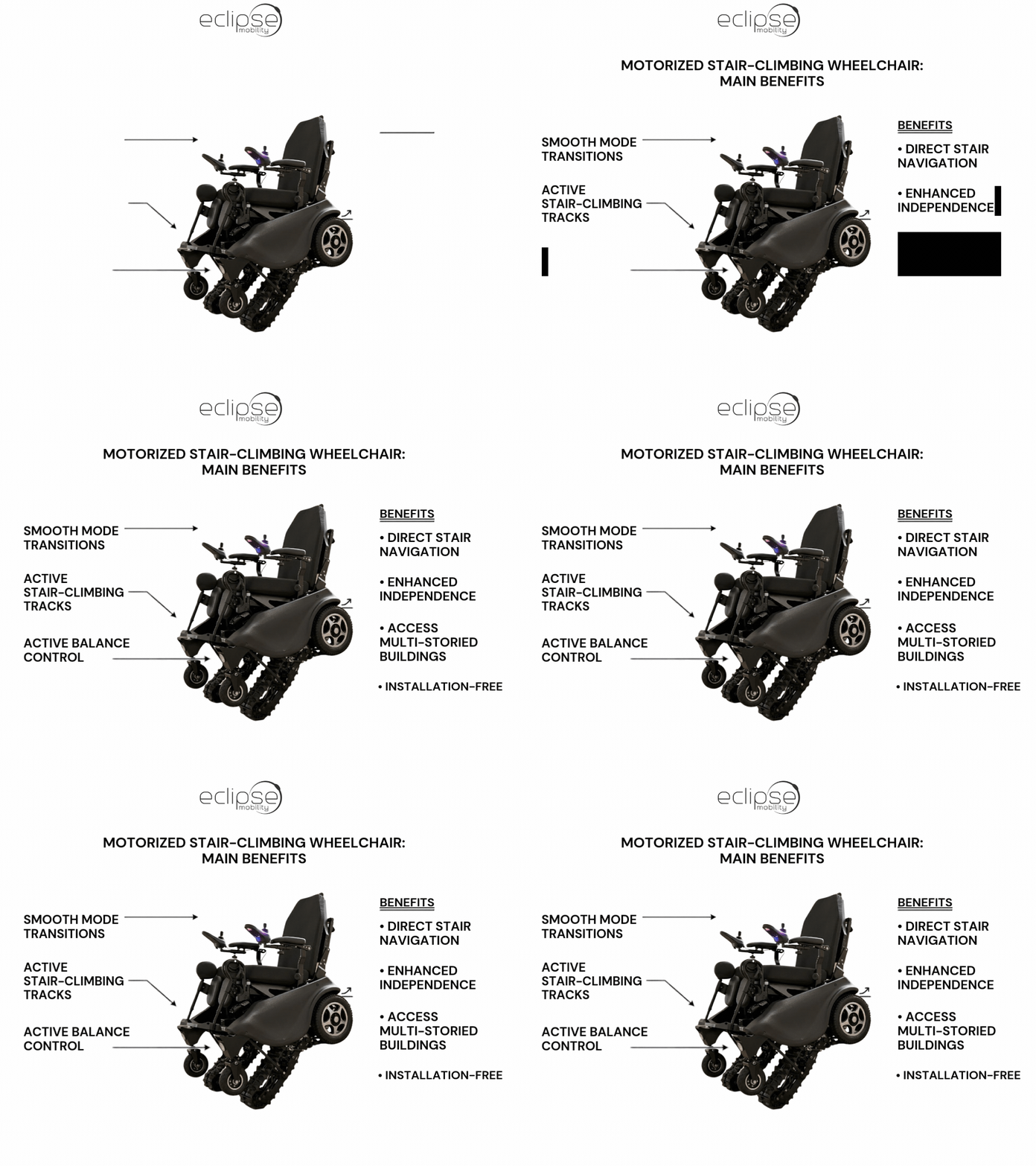
A motorized stair climbing wheelchair is a power wheelchair engineered with a secondary drive system — usually a tracked undercarriage or a rotating multi-wheel cluster — that grips stair edges and moves the chair up or down in a controlled sequence. Models like the Scewo BRO or the Caterwil GTS3 switch between a wheel mode for flat ground and a track mode for stairs, all controlled through a single joystick. 

This is a type of complex rehab technology (CRT), the same category that includes tilt-in-space and standing power wheelchairs. What separates it from those systems is purpose: standing wheelchairs address posture and circulation; stair climbers address a single environmental obstacle. 

How Does a Wheelchair Stair Climber Work?

The mechanism matters because it explains the cost and limitations. Most electric stair climbing wheelchairs use one of two approaches: 

Tracked systems deploy rubber tracks, similar to a small tank. That grip each stair edge as the chair rocks backward and climbs one step at a time. Wheel-cluster systems use three or more small wheels arranged in a rotating triangle around a central axle, walking the chair up the stairs step by step. 

Both approaches require a self-balancing gyroscope, a low center of gravity, and precise stair dimensions to work safely. That’s a lot of engineering packed into one chair, and it’s most of the reason these models run well beyond what a standard custom power wheelchair costs. 

Who Actually Needs One?

Not everyone with mobility limitations needs a stair-climbing chair, and in most cases, the honest answer is that a well-configured power wheelchair combined with home modifications gets the job done. A motorized stair climbing wheelchair tends to make sense when someone lives in a walk-up building with no elevator option, works in a facility with unavoidable stair access, or simply values the independence of skipping a lift installation entirely. 

For everyone else — and that’s the majority of people managing spinal cord injury, multiple sclerosis, muscular dystrophy, or post-stroke mobility loss — the more practical path is pairing the right power chair with ramps, portable stairlifts, or home renovations. Our team walks through those trade-offs during a consultation, because the “cooler” option isn’t automatically the right one for daily life.

How Does a Wheelchair Stair Climber Work? The Insurance Reality

This is where a lot of research online falls short. Electric stair climbing wheelchairs are almost never covered by Medicare, Medicaid, or private insurance in the United States, because they don’t meet the medical necessity criteria under Medicare’s power wheelchair classifications. Standard and complex power wheelchairs, by contrast, frequently qualify — especially when a licensed Assistive Technology Professional documents functional need. 

That single fact changes the calculus for most families. A stair-climbing chair might run tens of thousands of dollars out of pocket, while a comparable custom power wheelchair with tilt, recline, or standing function can often move through insurance approval in a matter of weeks. 

A Better Starting Point

In most cases, we recommend starting with a proper seating and mobility evaluation rather than shopping for a stair-climbing model first. An Assistive Technology Professional can assess your home layout, your functional goals, and your insurance coverage together, then recommend whether a stair-climbing device is genuinely necessary or whether a well-fitted power wheelchair from providers like Eclipse Mobility covers everything you need. That evaluation alone often saves families months of research and thousands of dollars in trial and error. 

Take the Next Step Toward Better Mobility

If you’re ready to improve daily comfort, independence, and overall quality of life, the Permobil F5 standing wheelchair is a powerful solution.

Frequently Asked Questions

Q: What is a motorized stair climbing wheelchair? 
A: It’s a power wheelchair built with tracked or wheel-cluster drive systems that allow it to ascend and descend stairs without a ramp. It functions as both an everyday mobility chair and a stair-navigation device. 

Q: Does insurance cover an electric stair climbing wheelchair? 
A: Rarely. Medicare, Medicaid, and most private insurers don’t classify stair-climbing chairs as medically necessary, so these devices are usually paid out of pocket. Standard power wheelchairs have a far higher approval rate. 

Q: What’s the difference between a wheelchair stair climber and a stairlift? 
A: A stairlift is a fixed or portable device installed on the stairs, moving the person (often while seated in their own chair) up and down. A stair-climbing wheelchair is a self-contained chair that climbs stairs directly, with no separate equipment needed. 

Q: Is a motorized stair climbing wheelchair right for someone with a spinal cord injury? 
A: It depends on trunk stability, home layout, and daily routine. Many people with spinal cord injuries do better with a standard or standing power wheelchair paired with ramps; a stair-climbing model is worth exploring mainly if elevator-free stairs are unavoidable. 

Q: How long does it take to get a custom power wheelchair approved? 
A: For most clients, the process from consultation to delivery takes about 4 to 6 weeks, depending on the complexity of the customization and how quickly insurance approval comes through. 

Have questions about whether a stair-climbing wheelchair or a custom power wheelchair fits your situation? Schedule a consultation with Eclipse Mobility’s Assistive Technology Professionals to get a plan built around your home, your body, and your coverage. 


Categories
Uncategorized

Your Bridge to Recovery: A Guide to Wheelchairs During Your GBS (Guillain-Barré Syndrome) Journey

Guillain-Barré Syndrome (GBS) is a rare but serious autoimmune disorder where the body’s immune system attacks its own peripheral nerves. This acute condition can lead to rapid-onset muscle weakness, tingling, and in severe cases, temporary paralysis. For individuals navigating the path of GBS, mobility often becomes a central, immediate challenge. A wheelchair is not merely a temporary necessity; it is a vital, adaptive tool—a bridge to recovery—that provides independence, supports the rehabilitation process, and helps maintain function during the crucial stages of weakness and recovery. Understanding the unique role of different wheelchairs for GBS patients is essential for patients, families, and healthcare providers in maximizing outcomes and maintaining dignity throughout the journey.

This comprehensive guide will explore the specific stages of GBS where mobility aids are critical, delve into the various types of wheelchairs best suited for GBS patients during acute and recovery phases, and highlight the non-negotiable importance of expert fitting and support to ensure a successful return to full mobility.

Understanding GBS and the Need for Adaptive Mobility

Guillain-Barré Syndrome typically progresses through three phases: the acute phase, the plateau phase, and the recovery phase. The need for a mobility device changes dramatically across these stages.

The Acute Phase: Protecting the Body

The acute phase, which can last from a few days to four weeks, is characterized by rapidly progressive muscle weakness that often ascends from the lower limbs. In its most severe presentation, weakness can affect the trunk, upper limbs, and respiratory muscles, requiring intubation and intensive care.

  • Mobility Needs: During this phase, the patient is often non-ambulatory, requiring complete support. A hospital bed or specialized reclining chair is used initially. As stability improves, the need shifts to a chair that can provide full, safe postural support and facilitate early mobilization.

  • Wheelchair Role: A wheelchair provides a means for the patient to leave their bed and participate in limited activities or attend therapy sessions.

Bridge Your Path to Recovery with Expert Mobility Support.

Navigating mobility during GBS requires adaptive, high-quality equipment that changes with your needs. Eclipse Mobility offers specialized lightweight and customizable solutions designed to support every phase of your recovery journey.

The Plateau Phase: Establishing Stability

This phase lasts from days to weeks, where the condition stops progressing. Muscle weakness and paralysis remain at their most severe level.

  • Mobility Needs: The patient requires maximal assistance for transfers and mobility. Pressure injury prevention is a primary concern due to immobility.

  • Wheelchair Role: The chair must be comfortable, provide superior positioning to prevent contractures and spinal deformities, and include features that aid in pressure relief and assisted transfers.


The Recovery Phase: The Long Road Back

The recovery phase can last from a few months to several years, with the majority of function returning within 6 to 12 months. This is where the wheelchair becomes a critical tool for rehabilitation and active independence.

  • Mobility Needs: The patient gains strength, often starting with the upper body and descending. The mobility aid must transition from a supportive device to a functional one that promotes self-propulsion and activity, reducing reliance on caregivers.

  • Wheelchair Role: The wheelchair serves as a safe bridge for ambulation training. It facilitates endurance training and community mobility when walking short distances is possible but not sustainable for daily life.

Selecting Wheelchairs for GBS Patients: Phase by Phase

The GBS journey requires flexibility in equipment selection. Clinicians and families must often transition between wheelchair types or adjust features significantly as strength returns.

Phase 1: Acute and Plateau Support (Maximum Assistance)

During the period of most significant weakness, comfort, support, and pressure management are paramount.

  • Tilt-in-Space/Reclining Wheelchairs:

    • Features: These chairs allow the entire seat and back to tilt or recline, often operated by a caregiver.

    • Suitability: Essential for patients with little to no trunk control, significant weakness, or those who cannot independently perform pressure relief. Tilt helps redistribute pressure off the sitting bones and manage orthostatic hypotension (a drop in blood pressure upon sitting up). Recline assists with comfort and ease of care.

    • Seating: Requires custom or highly contoured seating components, lateral trunk supports, and specialized pressure-relieving cushions (air or gel) to mitigate the high risk of pressure ulcers associated with prolonged immobility.

  • High-Back Manual Wheelchairs (Transport Chairs):

    • Features: Basic chairs with tall, rigid backs.

    • Suitability: Primarily used as transport within the facility or home for very short periods. They are generally not suitable for long-term sitting due to poor pressure management and lack of adjustability.


Phase 2: Early to Mid-Recovery (Building Independence)

As upper body strength begins to return, the focus shifts to minimizing reliance on others and maximizing the ability to self-propel.

  • Power Wheelchairs (for temporary use):

    • Features: Simple to complex power wheelchairs controlled by a joystick.

    • Suitability: For patients whose lower extremity recovery is lagging behind their upper body recovery, or for those who still lack the stamina for manual wheelchair propulsion over necessary distances. Power mobility allows the patient to return to work, school, or community activities earlier, supporting psychological well-being.

    • Considerations: Simple, durable chairs (like a basic mid-wheel drive or rear-wheel drive) may be trialed. The key is ease of use and reliability.

  • Manual Lightweight Wheelchairs (The Bridge):

    • Features: Lightweight aluminum frames, quick-release wheels, adjustable axle position.

    • Suitability: The ideal choice when the user develops sufficient upper body strength to self-propel. The lighter weight and precision engineering reduce the effort and strain on the shoulders, preserving energy for rehabilitation exercises and ADLs.

    • Importance: A lightweight chair is crucial because recovery can be slow, and using a heavy chair will impede endurance training and risk secondary shoulder injury.


Phase 3: Late Recovery and Long-Term Mobility (Maximizing Ambulation)

As strength continues to return, the wheelchair’s role narrows to long-distance mobility and backup support.

  • Ultra-Lightweight Manual Wheelchairs:

    • Features: Highly efficient, often rigid-frame chairs, minimal weight.

    • Suitability: For patients who achieve near-full recovery but may still require wheeled mobility for long outings or periods of fatigue. The chair is highly portable and easy to load, making it ideal for sporadic community use.

  • Other Aids: At this stage, the focus shifts fully to ambulation, using aids like canes, crutches, or walkers as prescribed by a physical therapist. The wheelchair serves as a necessary backup.

The Bridge of recovery: for gbs

Key Considerations for Wheelchair Prescription in GBS

Given the nature of GBS—acute onset with a high probability of significant, though often incomplete, recovery—the choice of equipment must prioritize flexibility, adaptability, and long-term joint health.

1. The Dynamic Nature of Recovery

The most unique challenge in prescribing wheelchairs for GBS patients is that the patient is continually changing.

  • Adjustability: Any chosen wheelchair, particularly in the recovery phase, must be easily adjustable. As the user gains strength, the seating position (especially the axle relative to the user’s center of gravity) needs frequent adjustment to maximize propulsion efficiency and minimize shoulder strain.

  • Modular Design: Opt for chairs with modular components (like removable armrests, adjustable backrests, and detachable footrests) that can be easily removed or swapped out as the user’s need for support decreases.


2. Pressure Management and Skin Integrity

The period of severe paralysis and immobility places GBS patients at extremely high risk for pressure ulcers.

  • Cushion Selection: Specialized pressure-relieving cushions (e.g., air-cell cushions or custom-contoured foam) are mandatory during the plateau and early recovery phases.

  • Tilt/Recline: Even in the recovery phase, patients may have sensory deficits or impaired muscle function, making a tilt-in-space feature important if they lack the ability to perform independent pressure relief lifts.


3. Preventing Secondary Injuries (Upper Extremity Protection)

As the user begins to self-propel, protecting the shoulder joints, which are critical for transfers and ADLs, is essential.

  • Lightweight is Non-Negotiable: A heavy chair will fatigue recovering muscles and introduce significant strain. The slight difference in cost between a standard and a lightweight manual wheelchair is a small price to pay to avoid lifelong shoulder pain.

  • Proper Propelling Technique: Intensive training from a physical therapist is required to teach an efficient, ergonomic push stroke that conserves energy and avoids high-impact forces on the joints.


4. Transfers and Functional Mobility

The wheelchair must facilitate the eventual goal: independent transfers and ambulation.

  • Removable Components: Armrests and legrests must be easily removable to allow close positioning for sliding board or stand-pivot transfers.

  • Seat Height: The seat height must be correct for the patient’s regaining leg length to allow for safe feet-on-the-floor maneuvering and preparation for standing transfers.

The Role of the Rehabilitation Team

The successful use of wheelchairs for GBS patients is entirely dependent on a collaborative team effort.

  • Physical Therapist (PT): Assesses muscle strength, prescribes the correct wheelchair dimensions, trains on safe transfers, and teaches efficient propulsion and ambulation techniques.

  • Occupational Therapist (OT): Focuses on positioning, seating, and the use of the chair in the home and community to maximize the performance of ADLs (dressing, cooking, hygiene).

  • Certified Seating and Mobility Specialist (CSMS): Provides expertise on complex seating systems, pressure management, and the specific adjustment of lightweight manual and power wheelchairs for optimal recovery.

This team ensures that the equipment evolves alongside the patient’s improving condition, preventing the wheelchair from becoming an obstacle to recovery.

Conclusion

The journey through Guillain-Barré Syndrome is marked by acute challenges and tremendous capacity for recovery. Throughout this process, the wheelchair serves as a vital tool—a bridge to recovery—that facilitates rehabilitation, preserves energy, prevents secondary complications, and ensures continuous engagement with life. Choosing the right wheelchairs for GBS patients is a dynamic process that requires meticulous assessment, prioritizing lightweight, adaptable, and highly supportive equipment in the acute stages, and transitioning to highly efficient, ultra-lightweight frames in the recovery phase. By making informed choices, GBS patients can maintain their independence and focus their energy where it matters most: on getting stronger and achieving a full return to function.

Ready to Find the Mobility Solution That Supports Your Recovery? Navigating mobility needs during GBS recovery requires expert guidance and flexible, high–quality equipment. At Eclipse Mobility, we specialize in providing adaptable lightweight manual wheelchairs and specialized seating solutions designed to evolve with your changing strength. We partner with your therapists to ensure the equipment perfectly supports your rehabilitation journey. 

Frequently Asked Questions (FAQs) 

  1. Why do GBS patients often need a wheelchair during recovery?

Guillain-Barré Syndrome (GBS) can cause rapid muscle weakness, loss of mobility, and temporary paralysis, making walking and daily movement difficult or unsafe. A wheelchair acts as a vital bridge to recovery by supporting independence, conserving energy, preventing falls, and helping patients participate safely in rehabilitation during every stage of recovery. 

  1. What type of wheelchair is best for someone with Guillain-Barré Syndrome?

The best wheelchair for a GBS patient depends on their stage of recovery. During the acute and plateau phases, tilt-in-space or reclining wheelchairs provide maximum support, pressure relief, and positioning. As strength improves, lightweight manual wheelchairs or power wheelchairs help patients regain independence, improve endurance, and support active rehabilitation. 

  1. Why are lightweight manual wheelchairs important for GBS recovery?

Lightweight manual wheelchairs reduce the physical effort required for self-propulsion, which is especially important for individuals rebuilding strength after GBS. They help protect the shoulders from strain, improve mobility efficiency, conserve energy for therapy and daily activities, and encourage greater independence throughout the recovery process. 

  1. Can a wheelchair slow down recovery from Guillain-Barré Syndrome?

No. When properly prescribed and fitted, a wheelchair actually supports recovery rather than limiting it. The right wheelchair helps patients stay active, participate in physical and occupational therapy, prevent secondary complications such as pressure ulcers or falls, and safely transition back toward walking and functional mobility as strength returns. 

  1. How do therapists help choose the right wheelchair for a GBS patient?

A rehabilitation team-including physical therapists, occupational therapists, and seating specialists-evaluates the patient’s strength, posture, mobility goals, pressure management needs, and recovery progress. They ensure the wheelchair is properly fitted, adjustable, and adaptable, so it continues to support the patient effectively throughout every phase of Guillain-Barré Syndrome recovery. 

Categories
Uncategorized

The Power to Live Fully: Your Guide to Wheelchairs and Muscular Dystrophy

Quick Answer: The right wheelchair matters more than people realize when you’re living with Muscular Dystrophy. It’s not just transportation, it’s what lets someone keep doing things on their own terms as their body changes. A power wheelchair fitted properly, with seating, tilt, and recline set up the right way, takes real pressure off the body. Posture holds up better. And there’s less energy wasted just staying upright or repositioning through the day, which counts a lot when the muscle weakness only moves in one direction. As needs to shift down the road, a good chair shifts too, so daily life stays manageable rather than turning into a struggle. 

Muscular Dystrophy (MD) is a group of inherited diseases characterized by progressive weaknesses and deterioration of muscle tissue. For individuals and families navigating this journey, the phrase “mobility aid” often evolves from a potential future consideration to an essential tool for daily life. A wheelchair, particularly a power wheelchair, is not a symbol of limitation; it is the power to live fully a meticulously engineered device that maintains independence, conserves vital energy, and supports the body against the relentless progression of the disease. Choosing the right mobility solution is one of the most critical decisions in managing MD, requiring careful consideration, expert guidance, and an understanding of how the chair must adapt over time. 

This comprehensive guide is designed to empower individuals with Muscular Dystrophy, their families, and healthcare providers. We will explore the critical timing of the transition to wheeled mobility, the distinct benefits of advanced power wheelchairs over manual options, and the non-negotiable importance of custom seating and positioning to manage the unique challenges posed by MD. 

When Is the Right Time to Transition to a Wheelchair for Muscular Dystrophy? 

One of the most common mistakes in managing progressive neuromuscular conditions like Muscular Dystrophy, particularly Duchenne Muscular Dystrophy (DMD), is delaying the introduction of wheeled mobility. The transition to using a wheelchair should be viewed as a proactive step toward energy conservation and continued participation, not a reactive measure taken only when walking is no longer possible. 

Why Is Energy Conservation So Important for People with Muscular Dystrophy? 

Muscle weakness in MD is progressive. For children and adults, expending significant energy to walk, even for short distances, takes a toll that extends beyond mere fatigue. 

(1) Protecting Core Strength: For individuals with DMD, for example, the energy required to struggle through mobility is better conserved for other essential functions, such as breathing, eating, and performing activities of daily living (ADLs). A power wheelchair allows users to reserve their limited muscle strength for functional tasks rather than propulsion. 

(2) Maintaining Participation: By providing effortless mobility, a wheelchair, even a scooter or manual chair for long distances in the early stages, ensures the individual can keep up with peers, attend school all day, and participate in community activities without the fear of falling or becoming completely exhausted. This prevents social isolation and promotes positive psychosocial development. 

(3) The Transition Point: While the age varies (most individuals with DMD transition to full-time use between the ages of 10 and 13), many specialists recommend introducing a manual wheelchair for long distances, or even a power wheelchair, earlier than this for energy conservation. Early power wheelchair use has been shown to support developmental gains in children by allowing them to independently explore their environment at the same stage as their peers.

The Power to Live Fully: Your Guide to Wheelchairs and Muscular Dystrophy

Should You Choose a Manual or Power Wheelchair for Muscular Dystrophy? 

While a manual wheelchair may be a temporary solution for short-distance or occasional use, relying on one for long-term independence is generally contraindicated for individuals with progressive MD. 

For all progressive forms of Muscular Dystrophy including DMD, Becker Muscular Dystrophy (BMD) where weakness can start later, and Limb-Girdle Muscular Dystrophy (LGMD)—the power wheelchair eventually becomes the definitive, long-term solution. 

What Features Should a Wheelchair for Muscular Dystrophy Include? 

Given the progressive and complex nature of the disease, a standard, off-the-shelf wheelchair will not suffice. The ideal wheelchair for Muscular Dystrophy is a complex rehabilitation device, specifically a highly customizable Group 3 or Group 4 power wheelchair. 

(1) Advanced Seating and Positioning (The Core Requirement) 

As muscle weakness progresses, the risk of developing spinal deformities like scoliosis and kyphosis, as well as contractures (muscle shortening and tightening), significantly increases. Proper seating is the primary intervention to manage these risks. 

(A) Power Tilt and Recline: These power seating functions are non-negotiable for MD management. These power seating functions are non-negotiable for MD management. 

Feature   Key Benefit 
Power Tilt  Redistributes pressure, reduces strain, and helps manage spasticity and low blood pressure. 
Power Recline  Opens the hip angle for better pressure relief, comfort, stretching, and rest. 


(B) Custom Contoured Seating: Specialized backrests and cushions provide total contact support, accommodating existing deformities and preventing the progression of spinal curvature. Lateral support is critical to maintaining trunk alignment and resisting leaning caused by unequal muscle deterioration. 

(C) Contracture Management: The wheelchair seating system must accommodate fixed joint contractures (common in the hips, knees, and ankles). This may require negative large angles (to tuck legs back) or customized cushions to maintain proper pelvic alignment despite hip limitations. 

(2) Alternative Drive Controls and Electronics

As hand and finger dexterity diminish, the ability to operate a standard joystick may be lost. The ideal power wheelchair for Muscular Dystrophy must feature expandable electronics to adapt the control interface. 

  • Programmable Joysticks: Allow fine-tuning speed, acceleration, and sensitivity. 
  • Alternative Input Devices: These systems enable independence even with severe weakness:  
  • Chin Control: A joystick manipulated by the chin. 
  • Head Array: Sensors embedded in the headrest that respond to subtle head movements. 
  • Sip-and-Puff: Uses breath control (sipping or puffing into a tube) to steer the chair and operate controls. 
  • Bluetooth and Integrated Controls: Modern systems, like Quantum’s Q-Logic or Permobil’s controls, allow users to operate their smartphones, tablets, and even smart home devices directly through the wheelchair drive control interface. 

(3) Power Seat Elevation and Standing Function

These advanced features boost function, social integration, and physiological health. 

  • iLevel®/Seat Elevation: Lifts the user up to standing or counter height. This is crucial for reaching objects, engaging in eye-level conversations, and improving independence in tasks like cooking and transferring. 
  • Standing Wheelchairs: Allow the user to move from a seat to a full standing position. The benefits include improving bone density, promoting better circulation, assisting with bowel and bladder function, reducing the magnitude of contractures, and enhancing social interaction. 

(4) Drive Wheel Configuration

The selection of the drive system impacts maneuverability and stability, depending on the user’s primary environment. 

  1. Mid-Wheel Drive (MWD): Most common choice. Offers the smallest turning radius, making it excellent for maneuvering indoors (school, home, office) and is generally intuitive to drive. 
  1. Rear-Wheel Drive (RWD): Most stable at higher speeds and generally better for outdoor travel over varied terrain. Has a larger turning radius. 
  1. Front-Wheel Drive (FWD): Good stability on inclines and obstacles but can be less intuitive for new users. 

Why Is a Multidisciplinary Assessment Essential When Choosing a Wheelchair? 

Securing the optimal wheelchair is a process that requires a specialized team, often referred to as a Complex Rehabilitation Technology (CRT) team. This team ensures that the chair is medically necessary, clinically appropriate, and perfectly customized. 

(1) The Clinical Team: Involves the Physiatrist (PM&R physician) or Neuromuscular Specialist, a Physical Therapist (PT), and an Occupational Therapist (OT), often one who is a Certified Seating and Mobility Specialist (CSMS). 

(2) Comprehensive Evaluation: The team assesses the user’s current muscle strength, range of motion (especially for contractures), functional abilities (transfers, ADLs), home and school environment, and, critically, the anticipated progression of the disease. 

(3) Feature Matching: This is where the clinical team matches specific power functions (tilt, recline, standing) and controls (joystick, head array) to the user’s documented functional deficits and future needs. 

(4) Funding and Advocacy: Since these specialized power wheelchairs and features can be costly, the clinical team and the equipment supplier work together to write extensive medical justifications to secure funding from insurance providers. Users and families often need to be prepared to advocate fiercely for the features that provide the best quality of life. 

Conclusion 

For individuals living with Muscular Dystrophy, the wheelchair is an indispensable tool that dramatically influences the trajectory of their independence and well-being. By embracing wheeled mobility proactively, particularly by transitioning to a highly adaptable, complex power wheelchair with advanced seating and alternative controls, users can effectively manage energy resources, prevent secondary complications like scoliosis and pressure injuries, and continue to participate fully in life’s activities. The key to success lies in a collaborative, forward-thinking approach, utilizing the expertise of a specialized mobility team to ensure the chair adapts as the disease progresses, providing continuous support and maximum function. A properly chosen wheelchair is truly the power to live fully. 

Ready to Find the Mobility Solution That Adapts with You? At Eclipse Mobility, we specialize in Complex Rehabilitation Technology, understanding the critical and progressive needs associated with Muscular Dystrophy. We partner with your clinical team to provide expertly fitted power wheelchairs that feature essential functions like power tilt, recline, and specialized controls designed to support your independence now and into the future.

Secure Your Independence: Find the Right Power Solution.

Don't wait for limitations to manage your mobility. Eclipse Mobility offers specialized power wheelchairs and customized seating systems essential for managing Muscular Dystrophy progression. Our team is dedicated to maximizing your function and comfort.

Frequently Asked Questions

Q.1 When should someone with Muscular Dystrophy start using a wheelchair?

Most specialists say don’t wait for walking to become a real struggle before considering one. Getting a wheelchair into the picture early on saves energy, cuts fatigue, and cuts down fall risk too which, over time, means someone can stay active and independent for much longer.

Q.2 Is a power wheelchair better than a manual wheelchair for Muscular Dystrophy?

Usually, yes. Manual chairs rely on the user pushing themselves, and as Muscular Dystrophy progresses, that becomes harder eventually too hard to keep up. A power wheelchair takes that demand away completely. Strength that would’ve gone into self-propelling gets saved for other daily tasks instead. There’s also the seating side of things: power chairs simply offer options manual ones don’t have room for.

Q.3 What wheelchair features are most important for people with Muscular Dystrophy?

Power tilt and recline are usually considered the biggest ones, since they let position change without needing to physically move the person. Custom seating and pressure-relieving cushions matter just as much though they’re what actually keep pressure injuries at bay and support the body properly as spinal changes or contractures start to develop.

Q.4 Can a wheelchair be customized as Muscular Dystrophyprogresses?

Yes, and this is really where the more advanced power wheelchairs earn their price tag. Expandable controls, alternative driving setups like chin or head controls, seat elevation, standing functions all of it can be added or adjusted so the chair keeps up with the person instead of needing to be swapped out every time something changes.

Q.5 Who helpsdeterminethe right wheelchair for someone with Muscular Dystrophy?

It’s rarely a solo decision. Usually a whole rehab team gets involved a physiatrist or neuromuscular specialist, a physical therapist, an occupational therapist, and someone who specializes in seating and mobility. Together they look at what the person can do now, what’s likely to change, and what their daily environment looks like, then recommend a setup based on all of that.

Categories
Uncategorized

Top 5 Benefits of Choosing a Manual Lightweight Wheelchair: Unlocking Independence and Health

For individuals seeking a mobility solution that offers maximum freedom, efficiency, and portability, the manual lightweight wheelchair stands out as an exceptional choice. Moving beyond the bulk and limitations of standard chairs, a manual lightweight wheelchair is a precision tool designed to enhance daily life. It represents a significant step toward reclaiming independence and proactively improving long-term health. This comprehensive article delves into the top five compelling benefits of opting for a manual lightweight wheelchair, exploring how this category, especially a custom lightweight wheelchair, provides unparalleled advantages over heavier alternatives. 

Top 5 Benefits of Choosing a Manual Lightweight Wheelchair: Unlocking Independence and Health

1. Maximized Mobility and Efficiency: The Power of Lightweight Design

The primary and most significant advantage of choosing a manual lightweight wheelchair is the dramatic improvement in mobility and propulsion efficiency. This benefit is compounded when moving to an ultra-lightweight or a custom lightweight wheelchair. 

Reduced Propulsion Effort and Energy Conservation

A heavy, standard wheelchair requires considerable energy to start, stop, and maneuver. This excess energy expenditure often leads to fatigue, limiting a user’s ability to participate fully in daily life.

  • Lighter Weight, Easier Movement: The fundamental physics of a lightweight frame (often made from high-grade aluminum or titanium) means less mass for the user to push. For users with limited upper body strength or endurance, this difference is transformative, allowing them to travel farther and faster with less effort.
  • Enhanced Endurance: By conserving energy throughout the day, users can dedicate their stamina to activities of daily living, work, education, and social engagement, rather than just pushing their chair. This directly translates to increased participation and a higher quality of life.
  • Improved Start/Stop Dynamics: Lightweight chairs accelerate and decelerate more easily, which is crucial for navigating dynamic environments like busy streets, stores, or crowded hallways. This responsiveness boosts confidence and safety.

Precision Engineering for Efficiency

A custom lightweight wheelchair takes efficiency even further through meticulous engineering and fitting:

  • Optimal Center of Gravity: The axle is precisely positioned relative to the user’s weight (the “Center of Gravity” or COG). A COG that is correctly placed allows the user to balance and perform small wheelies (to clear thresholds or curbs) safely, while minimizing the distance the hand has to travel for each push, maximizing stroke efficiency.
  • Rigid Frame Advantage: Many high-end manual lightweight wheelchairs feature a rigid frame (non-folding). While folding frames offer portability, a rigid frame provides superior energy transfer because none of the push energy is absorbed by moving parts or flexing joints. Every ounce of effort translates directly into forward motion, making propulsion significantly easier and more efficient over the long term.

Take Control with a Custom Lightweight Wheelchair

Don't let a heavy, inefficient chair limit your life. Eclipse Mobility specializes in ultra-lightweight and custom manual wheelchairs designed for maximum efficiency, portability, and long-term joint health.


2. Superior Portability and Ease of Transport

Independence doesn’t end when the user encounters a flight of stairs or needs to get into a car. The portability of a manual lightweight wheelchair is a non-negotiable benefit for an active lifestyle, facilitating travel and community integration.

Effortless Lifting and Loading

For users who transfer their wheelchair into a car independently, or for caregivers who assist with loading, reducing the weight of the chair is critical for preventing injury.

  • Reduced Risk of Caregiver Injury: Caregiver back injuries are a major concern. Switching from a 40-pound standard chair to a 15-pound custom lightweight wheelchair drastically reduces the physical burden on family members or personal assistants.
  • Increased Independence in Transportation: An active user can often break down and load an ultra-lightweight chair into the passenger or back seat of their vehicle without assistance. This capability is a huge boost to autonomy, allowing spontaneous trips and simplifying daily logistics like errands and commuting.
  • Ease of Travel: Lightweight chairs are simpler to manage during air travel, public transport, or maneuvering into inaccessible areas. Their compact size and low weight minimize the chances of damage during handling by baggage services.

Simple Disassembly

Most manual lightweight wheelchairs are designed for quick and easy breakdown. Components like the quick-release wheels, backrest, and footrests detach easily, reducing the largest piece—the main frame—to a manageable weight and size for transport.

five top benefits of manual lightweight wheelchair

3. Improved Long-Term Joint Health and Injury Prevention

Repetitive strain injuries (RSIs) are a significant occupational hazard for long-term manual wheelchair users, with shoulder and wrist pain being particularly prevalent. The choice of a manual lightweight wheelchair, especially a customized one, is a crucial proactive measure against these debilitating conditions.

Minimizing Shoulder and Wrist Strain

Efficient, low-effort propulsion is the key to preserving the integrity of the upper body joints.

  • Ergonomic Propulsion: Because the chair is lighter and precisely fitted (with the optimal axle position and seat height), the user can employ a more biomechanically efficient push stroke. This means less force, less impact on the push rims, and a reduction in the forces that cause rotator cuff impingement and carpal tunnel syndrome.
  • Preventing Repetitive Stress: Over the course of a day, a user performs thousands of push strokes. Reducing the effort of each stroke by even a small percentage results in a massive cumulative reduction of stress on the shoulders and elbows over years of use. This helps prevent or postpone the onset of chronic shoulder pain, which can severely limit independence later in life.

Customization for Optimal Biomechanics

A custom lightweight wheelchair is prescribed after a thorough seating and mobility assessment to ensure the fit supports the user’s specific joint health requirements: 

  • Perfect Seat Height: Ensuring the user’s elbow is at the correct angle (typically 100-120 degrees) when reaching the push rim is vital for minimizing stress and maximizing propulsion effectiveness.
  • Camber: The angle of the main wheels (camber) can be adjusted in many custom lightweight wheelchairs. Increased camber makes the chair more stable and responsive but slightly wider. It also changes the angle of the push rim relative to the user’s hand, which can be optimized for wrist health.


4. Enhanced Posture, Comfort, and Seating Support

While lightweight frames are the foundation, the design sophistication of manual lightweight wheelchairs integrates advanced seating options essential for posture and pressure management.

Superior Postural Support

Unlike basic chairs with sling seats and backs that promote poor, slumped posture, manual lightweight wheelchairs are designed to accept and integrate custom seating components.

  • Backrest Options: These chairs accommodate rigid or tension-adjustable backrests that can be set to the precise angle and height needed to support the user’s spine, preventing kyphosis (excessive forward curvature) and promoting an upright, functional posture.
  • Pelvic Stability: Precise sizing ensures that the seat width is correct, preventing the pelvis from tilting or rotating, which is the foundation of all good seated posture. This stability directly improves breathing, digestion, and functional reach.

Pressure Management Integration

Active, long-term wheelchair users are always at risk for pressure injuries (ulcers).

  • Custom Cushion Integration: Lightweight chairs are designed with precise frame dimensions to integrate specialized pressure-relieving cushions (air, gel, or custom foam) at the correct height, ensuring even weight distribution and skin protection. The lightweight nature of the chair doesn’t compromise the integrity of the seating system.
  • Fixed vs. Adjustable: The rigidity and adjustability of a custom lightweight wheelchair frame allow seating specialists to fine-tune every angle, ensuring the user is positioned for both function and maximal pressure relief.


5. Increased Self-Esteem and Psychological Well-being

The benefits of a manual lightweight wheelchair extend beyond the physical and logistical; they significantly impact the user’s self-perception, confidence, and integration into society.

A Tool for Engagement, Not an Obstacle

A standard, heavy chair can often feel like a cumbersome burden or an obvious medical device. In contrast, modern, sleek manual lightweight wheelchairs—especially custom lightweight wheelchairs—are often viewed as pieces of high-performance mobility equipment. 

  • Sleek and Modern Design: Manufacturers of custom lightweight wheelchairs prioritize aesthetics, offering streamlined designs, color options, and minimalist profiles. This can help normalize the device, allowing the user to feel more comfortable and confident in public.
  • Increased Independence and Control: The feeling of effortless movement and the ability to handle daily obstacles independently provide a huge psychological boost. When users feel they are in full control of their mobility, their self-esteem and willingness to engage in social activities improve dramatically.
  • Functional Confidence: Knowing the chair can handle the day’s challenges—climbing a small curb, navigating a busy corridor, or loading into a car—reduces stress and anxiety, fostering a sense of capability and freedom. This shift in mindset from dependence to capability is invaluable.


Conclusion

The decision to choose a manual lightweight wheelchair is one of the most impactful choices an individual can make regarding their long-term health and independence. The benefits—from maximized efficiency and unparalleled portability to the critical preservation of upper body joint health and significant psychological well-being—collectively demonstrate why this category, especially a custom lightweight wheelchair, is the gold standard for active and long-term manual wheelchair users. It is an investment that pays dividends daily, transforming a mobility device into a true tool for living a fuller, more active, and independent life. 

Ready to Experience the Freedom of Lightweight Mobility? Don’t let a heavy, inefficient chair hold you back. At Eclipse Mobility, we specialize in providing expertly fitted custom lightweight wheelchairs designed for your unique body and active lifestyle. Our specialists are dedicated to guiding you through the assessment and customization process, ensuring you receive a chair that maximizes your comfort, preserves your joint health, and unlocks your full potential.

Frequently Asked Questions

What is a manual lightweight wheelchair?

A manual lightweight wheelchair is a mobility device designed with lightweight materials such as aluminum or titanium to reduce overall weight. It requires less effort to propel, making daily movement easier and more efficient than standard wheelchairs.

How does a lightweight wheelchair improve mobility?

A lightweight wheelchair requires less energy to push, allowing users to travel farther with less fatigue. Its responsive design also makes it easier to maneuver through tight spaces, busy environments, and everyday obstacles.

Are lightweight wheelchairs easier to transport?

Yes. Most manual lightweight wheelchairs are designed for portability and can be easily lifted, loaded into vehicles, or disassembled for travel. Their reduced weight makes transportation more convenient for both users and caregivers.

Can a custom lightweight wheelchair help protect joint health?

A custom lightweight wheelchair can help reduce strain on the shoulders, wrists, and elbows by promoting a more efficient propulsion technique. Proper fitting and customization also support better biomechanics, helping minimize the risk of repetitive stress injuries.

Categories
Uncategorized

How to Choose Pediatric Wheelchairs for Your Child’s Needs?

Selecting the right pediatric wheelchair for your child is a significant decision that goes far beyond simply providing mobility. It’s about fostering independence, encouraging exploration, supporting development, and enhancing their overall quality of life. A properly chosen pediatric wheelchair can empower a child with mobility limitations to participate more fully in school, play with friends, and engage with the world around them. This comprehensive guide will walk you through the essential factors to consider when choosing wheelchairs for kids, ensuring you make an informed decision that best meets your child’s unique needs, now and in the future.

Understanding the Unique Needs of Children Requiring Wheelchairs

Choosing a pediatric wheelchair differs considerably from selecting one for an adult. Children are constantly growing and developing, both physically and cognitively. Their needs are dynamic, and a wheelchair must accommodate these changes while supporting their developmental milestones. Key considerations specific to children include:

  1. Growth Accommodation: Children grow rapidly, and their wheelchairs need to be adaptable to these changes. Features like adjustable seat depth and width, backrest height, and armrest height are crucial to ensure the wheelchair remains comfortable, supportive, and correctly fitted over time, minimizing the need for frequent replacements.
  2. Developmental Stage: The child’s age and developmental stage will influence the type of wheelchair and its features. Younger children may require more supportive seating and caregiver assistance, while older children and teenagers may prioritize independence and maneuverability.
  3. Participation in Activities: Consider all the environments and activities your child participates in, including school, home, therapy sessions, playgrounds, and social events. The wheelchair should be suitable for these various settings and activities.
  4. Ease of Use for the Child and Caregivers: The wheelchair should be easy for the child to maneuver (if self-propelling) and for caregivers to push, transport, and maintain. Weight, folding mechanisms, and ease of adjustments are important factors.
  5. Durability and Safety: Children can be active, and their wheelchairs need to be robust enough to withstand daily use and potential bumps. Safety features like wheel locks, anti-tippers, and proper positioning components are essential.
  6. Cosmetic Appeal: While functionality is paramount, the appearance of the wheelchair can also impact a child’s acceptance and self-esteem. Colorful frames and customization options can make the wheelchair feel more personal and less like a medical device.
  7. Potential for Future Needs: Consider the progression of your child’s condition. Will their needs likely change in the future? Choosing a wheelchair with modular components or the potential for upgrades can be a wise long-term decision.

Empower Your Child's Mobility Journey

At Eclipse Mobility, we offer high-quality pediatric wheelchairs designed to support your child’s growth and independence. Our specialists are here to ensure the best solution for their unique needs.

Types of Pediatric Wheelchairs and Their Suitability

Just like adult wheelchairs, wheelchairs for kids come in various types, each designed to address different needs and lifestyles:

1. Standard Pediatric Manual Wheelchairs

  • Description: Basic manual wheelchairs scaled down for children. Often made of steel and offer limited adjustability.
  • Suitability: Typically used for temporary needs or for children who require a wheelchair for short distances and have a caregiver to propel them. Not ideal for long-term use or self-propulsion due to weight and limited customization.

2. Lightweight Pediatric Manual Wheelchairs

  • Description: Constructed from lighter materials like aluminum, making them easier for caregivers to push and for some children to self-propel. Offer more adjustability than standard models.
  • Suitability: A good option for children who will be using a manual wheelchair regularly and may have the strength to self-propel for moderate distances. The lighter weight and increased adjustability improve comfort and function compared to standard models.

3. Ultra-Lightweight Pediatric Manual Wheelchairs

  • Description: Made from high-performance lightweight materials (e.g., aluminum alloys, titanium), these wheelchairs are highly customizable and offer optimal propulsion efficiency. Available in both rigid and folding frame options.
  • Suitability: Ideal for active children who self-propel frequently and require a wheelchair that is lightweight, responsive, and can be precisely adjusted for optimal fit and function. Rigid frames offer maximum efficiency, while folding frames provide portability. These are often the choice for children with conditions like spina bifida or cerebral palsy who maintain a high level of independence.

4. Pediatric Tilt-in-Space and Recline Wheelchairs

  • Description: These wheelchairs allow for changes in posture without altering the hip angle (tilt) or by opening the hip angle (recline). Often feature supportive seating systems.
  • Suitability: Essential for children who cannot independently reposition themselves for pressure relief, have significant postural challenges, experience fatigue, or require assistance with feeding or respiratory function. These are often used for children with more complex neurological or neuromuscular conditions. They typically require caregiver assistance for operation.

5. Pediatric Power Wheelchairs

  • Description: Electrically powered wheelchairs controlled by a joystick or other alternative input devices. Scaled-down versions of adult power wheelchairs with safety features appropriate for children.
  • Suitability: For children who lack the upper body strength or endurance to self-propel a manual wheelchair effectively. Power wheelchairs provide independent mobility and access to their environment. They are particularly beneficial for children with progressive conditions or significant physical limitations. Safety features and appropriate training are crucial.

6. Pediatric Standing Wheelchairs

  • Description: Wheelchairs that allow the child to move from a seated to a standing position. Available in both manual and power-assisted models.
  • Suitability: Offer numerous physical and social benefits, including improved bone density, circulation, bowel and bladder function, respiratory function, and social interaction at peer level. May be appropriate for children with conditions like spina bifida or spinal cord injuries. Require careful assessment and training.

7. Pediatric Sports Wheelchairs

  • Description: Lightweight, highly maneuverable wheelchairs designed specifically for athletic activities and recreation.
  • Suitability: For children who participate in adaptive sports like basketball, tennis, or racing. These chairs are built for performance and durability during rigorous activity.

Key Factors to Consider When Choosing a Pediatric Wheelchair

Navigating the various types of wheelchairs for kids can be overwhelming. Here’s a checklist of crucial factors to guide your decision-making process:

  1. Seating and Positioning Needs: A proper seating system is paramount for comfort, postural support, and pressure management. Consider the need for contoured cushions, backrests, lateral supports, headrests, and pelvic positioning. Consult with an occupational or physical therapist specializing in pediatric seating.
  2. Growth Potential and Adjustability: Prioritize wheelchairs with adjustable components to accommodate your child’s growth. Look for features that allow changes in seat depth and width, backrest height and angle, leg rest length, and armrest height.
  3. Maneuverability and Weight: Consider the environments where the wheelchair will be used. A lighter, more compact wheelchair will be easier to maneuver in tight spaces and transport. For self-propelling children, the weight of the chair significantly impacts energy expenditure.
  4. Portability and Transportation: How will the wheelchair be transported (e.g., in a car, van, school bus)? Consider the weight and whether the chair folds easily. Some ultra-lightweight chairs are highly portable.
  5. Durability and Maintenance: Children’s wheelchairs need to withstand daily use and potential bumps. Inquire about the durability of the frame and components. Also, consider the ease of maintenance and availability of replacement parts.
  6. Safety Features: Ensure the wheelchair has appropriate safety features, including reliable wheel locks, anti-tippers (especially for rear-wheel drive power wheelchairs), and proper positioning to prevent falls or injuries.
  7. Control Systems (for Power Wheelchairs): If considering a power wheelchair, evaluate the child’s cognitive and motor skills to determine the most appropriate control system (e.g., joystick, switch controls, head array). Ensure the child receives adequate training on safe operation.
  8. Cosmetics and Personalization: While not the primary factor, allowing your child to choose a frame color or add personalized accessories can increase their acceptance and sense of ownership of their wheelchair.
  9. Trial and Assessment: Whenever possible, arrange for a trial period with different wheelchair models to see which best suits your child’s needs and preferences. A thorough assessment by a qualified therapist is crucial.
  10. Cost and Funding: Pediatric wheelchairs, especially custom or power models, can be expensive. Explore funding options through insurance, government programs, and charitable organizations. Understand the long-term costs of maintenance and potential repairs.


The Importance of Professional Guidance

Choosing the right pediatric wheelchair is a complex process that should always involve a multidisciplinary team. This team typically includes:

  • Your Child’s Physician: To provide medical necessity and overall guidance.
  • Occupational Therapist (OT): Specializes in seating and positioning, ADL performance, and environmental modifications.
  • Physical Therapist (PT): Focuses on mobility, transfers, strength, and range of motion.
  • Certified Seating and Mobility Specialist (CSMS): An expert in complex wheelchair systems and customization.
  • Rehabilitation Technology Supplier (RTS): The vendor who provides and fits the wheelchair.

These professionals will conduct thorough assessments, help you navigate the various options, ensure proper fitting, and provide training on safe and effective wheelchair use. Their expertise is invaluable in making the best choice for your child.

Conclusion

Selecting the right pediatric wheelchair is a crucial investment in your child’s independence, development, and overall well-being. By understanding the unique needs of children, the different types of wheelchairs available, and the key factors to consider, you can make an informed decision that empowers your child to engage more fully with their world. Remember that professional guidance from therapists and seating specialists is essential to ensure the chosen wheelchair provides optimal comfort, support, and functionality, adapting to your child’s growth and evolving needs.

Empower Your Child’s Journey with the Right Mobility Solution.

At Eclipse Mobility, we are dedicated to providing a wide range of high-quality pediatric wheelchairs designed to meet the diverse needs of children with mobility limitations. Our experienced team understands the importance of a proper fit and ongoing support. We partner with families and therapists to ensure every child has the mobility solution that best supports their growth, development, and active participation in life.

Explore our selection of pediatric wheelchairs and connect with our specialists today.

Categories
Uncategorized

How to Choose the Right Mobility Solutions for Your Lifestyle

In today’s world, mobility solutions are more diverse and sophisticated than ever, offering incredible opportunities for individuals to maintain their independence, pursue their passions, and engage fully with their communities. The journey of choosing the right mobility solution is highly personal, extending far beyond a simple medical prescription. It’s about aligning a device with your unique lifestyle, daily activities, aspirations, and environment. This guide will walk you through the essential considerations for selecting the perfect mobility wheelchair or other aid, ensuring it truly enhances your life rather than limiting it.


Understanding Your Lifestyle: The Foundation of Choice

Before diving into specific types of mobility solutions, the most crucial first step is a thorough self-assessment of your lifestyle. This isn’t just about your physical limitations, but about how you live and how you want to live. Consider the following:

  1. Daily Routine & Activities:
    • Home Environment: Do you live in a single-story home or multiple levels? Are hallways wide or narrow? What is the flooring like (carpet, hardwood, rugs)? Are bathrooms accessible? Do you spend most of your time in one room or move frequently?
    • Work/School/Volunteering: Does your work or educational environment require specific mobility solutions? Do you need to navigate stairs, uneven terrain, or busy public spaces?
    • Hobbies & Interests: Are you an avid gardener, a traveler, a sports enthusiast, or do you prefer quiet indoor activities? Your hobbies will significantly influence the type of mobility wheelchair or other device that best suits you.
    • Social Life: How often do you socialize? Where do you typically meet friends and family (restaurants, parks, malls)? Do these places have specific accessibility challenges?
  2. Physical Capabilities & Limitations:
    • Endurance and Strength: Can you self-propel a mobility wheelchair for extended periods without fatigue or pain? How far can you walk, if at all?
    • Balance and Stability: Do you experience dizziness or a fear of falling?
    • Cognitive Function: Can you safely operate complex controls, such as those found on power wheelchairs?
    • Upper Body Function: Do you have sufficient arm and hand strength and dexterity for propulsion, transfers, or operating controls?
    • Progressive vs. Stable Condition: Is your condition expected to improve, remain stable, or worsen over time? This impacts whether you need a temporary or long-term solution, and if adjustability for future needs is critical.
  3. Environmental Factors:
    • Indoor vs. Outdoor Use: Will the mobility solution primarily be used indoors, outdoors, or both? This dictates wheel size, suspension, durability, and maneuverability.
    • Terrain: Do you encounter smooth surfaces, carpet, gravel, grass, inclines, or curbs regularly?
    • Transportation: How will you transport your mobility wheelchair or device? Do you have an accessible vehicle, or will you rely on public transport or paratransit services?
  4. Caregiver Involvement:
    • If you have caregivers, what is their capacity and strength for assisting with transfers, pushing a manual wheelchair, or transporting equipment?

By carefully considering these aspects, you lay the groundwork for an informed decision, moving beyond a “generic” solution to a truly personalized one.


Find Your Perfect Mobility Fit Today.

Eclipse Mobility offers a wide range of mobility solutions, including cutting-edge power wheelchairs and versatile manual options, all designed for your unique needs.


Diverse Mobility Solutions: Matching the Device to Your Needs

The landscape of mobility solutions is rich and varied. Here’s a breakdown of common types and their suitability for different lifestyles:

1. Walking Aids (Canes, Walkers, Rollators)

  • Canes:
    • Description: Provide minimal support for balance and stability. Options include single-point, quad canes (four points of contact for more stability), and offset handles for better grip.
    • Suitability for Lifestyle: Ideal for individuals with mild balance issues, temporary injuries (e.g., sprained ankle recovery), or those needing slight support during ambulation. Best for indoor and smooth outdoor surfaces. Not for significant weight-bearing or long distances.
  • Walkers:
    • Description: Provide more significant support than canes, surrounding the user on three sides. Available in standard (no wheels, lifted for each step) and wheeled (two or four wheels).
    • Suitability for Lifestyle: For individuals needing moderate support, recovering from surgery, or with balance difficulties. Standard walkers are very stable but slow. Wheeled walkers (often with brakes) allow for smoother, faster movement.
  • Rollators:
    • Description: Four-wheeled walkers with hand brakes, a seat, and often a storage basket.
    • Suitability for Lifestyle: Excellent for individuals who can walk but have limited endurance or need frequent rests. The seat is invaluable for waiting in lines or resting during outings. Good for indoor and moderate outdoor use on paved surfaces. Less stable than standard walkers, so not ideal for severe balance deficits.


2. Manual Wheelchairs: Active Participation and Portability

Manual wheelchairs require either the user to propel themselves or a caregiver to push. Their suitability varies greatly with design.

  • Standard Manual Wheelchairs:
    • Description: Basic, often heavier (steel frame), with limited adjustability.
    • Suitability for Lifestyle: Best for temporary use (e.g., post-surgery), for short distances, or for individuals who are primarily pushed by a caregiver. Less ideal for self-propulsion due to weight and inefficient design.
  • Lightweight & Ultra-Lightweight Manual Wheelchairs:
    • Description: Made from lighter materials (aluminum, titanium, carbon fiber) and offer significant adjustability (seat height, axle position, camber). Ultra-lightweights can be rigid (most efficient for propulsion) or folding (more portable).
    • Suitability for Lifestyle: Perfect for active users who self-propel frequently and desire maximum independence. The precise fit and lighter weight reduce fatigue and shoulder strain, allowing for longer distances and more robust participation in daily activities, sports, and community engagement. Excellent for navigating varied indoor and outdoor environments.
  • Tilt-in-Space/Recline Manual Wheelchairs:
    • Description: The entire seating system or just the backrest can be tilted or reclined.
    • Suitability for Lifestyle: For individuals who cannot independently shift weight or maintain posture for long periods. Essential for pressure relief, managing spasticity, and facilitating feeding or respiratory function. Often used for individuals with severe neurological impairments or progressive conditions. Primarily caregiver-propelled due to weight and design.


3. Power Wheelchairs: Effortless Independence and Advanced Features

Power wheelchairs are electrically powered, controlled by a joystick or alternative input devices. They provide effortless mobility for individuals with significant strength or endurance limitations.

  • Standard Power Wheelchairs (Basic):
    • Description: More robust than scooters, with joystick control, but usually limited seating options.
    • Suitability for Lifestyle: For individuals who cannot self-propel a manual wheelchair but have relatively stable seating needs and good cognitive function to operate controls. Suitable for basic indoor and limited outdoor use on smooth surfaces.
  • Complex Rehabilitation Power Wheelchairs:
    • Description: Highly customizable, with various drive systems (front, mid, rear-wheel drive), sophisticated seating (power tilt, recline, leg elevation, seat elevation, stand function), and alternative input devices.
    • Suitability for Lifestyle: The gold standard for individuals with severe and/or progressive mobility impairments (e.g., high-level spinal cord injury, ALS, severe cerebral palsy). These power wheelchairs allow users to maintain maximum independence, participate in diverse activities, and manage complex medical needs (like pressure relief) through power functions.
      • Mid-Wheel Drive: Excellent turning radius, intuitive driving, good stability. Ideal for indoor maneuverability and a mix of indoor/outdoor use.
      • Front-Wheel Drive: Great outdoor performance, handles obstacles well, can climb curbs. Can feel less intuitive indoors for some.
      • Rear-Wheel Drive: Most stable at higher speeds, excellent for outdoor driving on varied terrain. Larger turning radius.
      • Power Seat Functions (Tilt, Recline, Elevate, Stand): Crucial for active lifestyles, allowing pressure relief, improved reach for ADLs, eye-level social interaction, and physiological benefits of standing.
      • Alternative Controls: Head arrays, sip-and-puff, chin controls open up independent mobility for individuals with very limited hand function, vastly expanding their lifestyle possibilities.

4. Mobility Scooters (Power Operated Vehicles – POV)

  • Description: Three or four-wheeled devices with a tiller steering column. Users sit in a seat and steer with handlebars.
  • Suitability for Lifestyle: Best for individuals who can stand, walk short distances, and transfer independently, but have limited endurance for longer distances (e.g., severe COPD, mild cardiac conditions, or general fatigue). Ideal for community outings like shopping, parks, or larger venues.
  • Pros: Often more affordable than power wheelchairs, easy to operate, some models disassemble for transport.
  • Cons: Less stable than power wheelchairs (especially 3-wheelers), limited postural support, not suitable for complex seating needs, less maneuverable in tight indoor spaces, and generally not for individuals who cannot stand or transfer independently.


5. Adaptive Equipment & Home Modifications

Often, a mobility wheelchair isn’t the only solution needed. Various adaptive equipment and home modifications can further enhance lifestyle and independence:

  • Ramps: Essential for navigating steps at home or in the community, providing access for wheelchairs and scooters.
  • Stair Lifts: For multi-story homes, enabling safe and independent travel between floors.
  • Grab Bars: Crucial for safety in bathrooms (showers, toilets) and near steps.
  • Transfer Benches/Shower Chairs: Facilitate safe bathing.
  • Raised Toilet Seats: Make toileting easier.
  • Reachers/Grabbers: Extend reach for items on high shelves or the floor.
  • Dressing Aids: Tools like button hooks, sock aids, or long-handled shoehorns for independent dressing.
  • Smart Home Technology: Voice-activated lighting, thermostats, or door locks can significantly enhance independence for individuals with limited dexterity or mobility.
  • Accessible Vehicles: Vans with ramps or lifts, or car modifications, are vital for community mobility and travel.


The Selection Process: A Collaborative Journey

Choosing the right mobility solution is rarely a solitary decision. It’s a comprehensive process best undertaken with a team of professionals.

  1. Professional Assessment:
    • Physician: Provides medical diagnosis and necessity for the device.
    • Physical Therapist (PT): Assesses physical strength, range of motion, balance, transfer ability, and mobility patterns. Evaluates how different devices impact posture and movement.
    • Occupational Therapist (OT): Focuses on functional independence in daily activities. Assesses the interaction between the user, the device, and the environment (home, work, community). They often specialize in seating and custom solutions.
    • Certified Seating and Mobility Specialist (CSMS): Often an OT or PT with advanced training in complex mobility wheelchair and seating systems. They are experts at matching the most intricate technologies to specific patient needs.
    • Rehabilitation Technology Supplier (RTS): The vendor who provides the equipment and works with the clinical team to ensure proper fitting and adjustments.
  2. Trialing Equipment: Whenever possible, test-drive different mobility solutions in various environments. This hands-on experience is invaluable for assessing comfort, maneuverability, ease of use, and overall suitability for your lifestyle.
  3. Considering Future Needs: If your condition is progressive, discuss how the chosen mobility solution can adapt or if different solutions might be needed down the line. A modular power wheelchair system, for instance, can often be modified as needs evolve.
  4. Funding and Resources: Understand your insurance coverage, government programs, or charitable organizations that may assist with the cost of mobility solutions. This often influences the available options.
  5. Training and Education: Once a mobility wheelchair or device is selected, comprehensive training on its safe and efficient use is paramount. This includes proper propulsion techniques (for manual chairs), joystick operation (for power wheelchairs), transfer methods, battery care, and basic troubleshooting.

Conclusion

Choosing the right mobility solutions is a transformative step towards reclaiming or enhancing independence and enjoying a fulfilling lifestyle. It’s about a deep understanding of your personal needs, aspirations, and the environments you navigate. Whether it’s the active freedom of a lightweight mobility wheelchair, the effortless independence of power wheelchairs, or the targeted support of a rollator, the ideal solution is one that seamlessly integrates into your daily life, enabling you to pursue your passions and connect with the world around you. This journey is best undertaken with expert guidance, ensuring every feature contributes to your comfort, safety, and ultimate well-being.

Ready to Find the Mobility Solution That Fits Your Life? At Eclipse Mobility, we are passionate about helping individuals discover the perfect mobility wheelchair and other mobility solutions that truly align with their unique lifestyles. Our experienced team offers personalized consultations, guiding you through the vast array of options to ensure you find a device that maximizes your independence and comfort.

Categories
Uncategorized

Why Custom Wheelchairs Improve Comfort and Mobility: A Tailored Approach to Empowered Living

For individuals who rely on a wheelchair for daily mobility, the difference between a generic, off-the-shelf model and a custom wheelchair can be monumental. It’s not merely about getting from point A to point B; it’s about achieving an optimal level of comfort, maximizing functional independence, and significantly enhancing the overall quality of life. This article delves deep into why customized wheelchairs are a superior choice for many users, exploring how their precise fit and tailored features directly translate into improved comfort, unparalleled mobility, and crucial long-term health benefits. We will also discuss the factors influencing custom wheelchair cost and why this investment often yields significant returns in well-being and independence.

The Fundamental Flaw of “One-Size-Fits-All”

Standard, or “off-the-shelf,” wheelchairs are designed to accommodate a broad range of users. While they serve a vital purpose for temporary use or for individuals with very basic, non-complex mobility needs, their inherent limitation lies in their lack of specificity. Just as a perfectly fitted pair of shoes prevents blisters and discomfort, a precisely tailored wheelchair prevents myriad issues that can arise from a generic fit.

The human body is complex and unique. Factors such as individual body dimensions, muscle tone, flexibility, existing deformities, risk of pressure injury, and specific functional goals vary dramatically from one person to another. A standard wheelchair, with its limited adjustability, simply cannot address these individual nuances. This often leads to:

  • Compromised Posture: Leading to spinal deformities (e.g., scoliosis, kyphosis), neck pain, and difficulty breathing or swallowing.
  • Increased Risk of Pressure Injuries: Uneven weight distribution on bony prominences due to poor fit.
  • Upper Extremity Pain and Injury: Inefficient propulsion mechanics in manual wheelchairs, leading to overuse injuries of the shoulders, wrists, and elbows.
  • Reduced Functional Independence: Difficulty performing activities of daily living (ADLs) due to awkward positioning or inability to access the environment effectively.
  • Fatigue and Discomfort: Constant struggle against an ill-fitting chair, leading to reduced endurance and overall diminished quality of life.

This is precisely where the philosophy of the customized wheelchair steps in – to eradicate these compromises and provide a mobility solution that is truly an extension of the user.

The Unrivaled Benefits of a Custom Wheelchair for Comfort

Comfort in a wheelchair transcends mere luxury; it is a fundamental requirement for health and well-being, especially for individuals who spend a significant portion of their day seated. A custom wheelchair is meticulously designed to cradle the user’s body in an optimal, supportive, and pressure-relieving position.

  1. Precision Fit and Support:
    • Unlike standard chairs with limited sizes, a custom wheelchair begins with a thorough biomechanical assessment and precise measurements of the individual’s body. This includes measurements of hip width, seat depth, back height, leg length, armrest height, and more.
    • This meticulous measurement process ensures that the wheelchair dimensions perfectly match the user, distributing weight evenly across the entire seating surface. This drastically reduces concentrated pressure on vulnerable areas, which is the primary cause of pressure sores.
    • Custom-molded seating systems, often created from precise body contours (e.g., using a vacuum-assisted beanbag chair to capture the shape), provide total contact support. This is invaluable for individuals with complex postural needs, neurological conditions, or existing deformities, offering stability where generic seating cannot.
  2. Pressure Injury Prevention:
    • This is perhaps one of the most critical comfort and health benefits. Pressure injuries (also known as bedsores or pressure ulcers) are a severe and often life-threatening complication for wheelchair users.
    • A customized wheelchair integrates advanced pressure-relieving cushions and backrests (made from specialized foams, gels, air cells, or hybrid materials) that are specifically chosen and configured based on the individual’s skin integrity, sensation, and risk factors.
    • Power seating functions like power tilt and recline, commonly found in complex custom wheelchairs, allow for frequent weight shifts and postural changes, actively redistributing pressure and promoting circulation. This is paramount for users who cannot independently perform pressure relief.
  3. Optimal Postural Alignment:
    • Good posture in a wheelchair is vital for respiratory function, digestion, circulation, and preventing musculoskeletal pain and deformities.
    • A custom wheelchair can incorporate specific backrest shapes, lateral supports, pelvic positioning belts, and headrests to maintain optimal spinal alignment. This prevents kyphosis (hunchback), scoliosis (lateral curvature), and pelvic obliquity, which are common in prolonged, unsupported sitting.
    • Proper alignment also reduces muscle fatigue, allowing the user to sit comfortably for longer periods without pain or slumping.
  4. Reduced Pain and Fatigue:
    • An ill-fitting chair forces the body into unnatural positions, leading to chronic pain in the back, neck, shoulders, and hips. The constant effort to maintain stability in a poorly fitted chair also leads to increased fatigue.
    • By contrast, a customized wheelchair provides ergonomic support, reducing strain on muscles and joints. The user expends less energy fighting gravity or compensating for inadequate support, leading to significantly reduced pain and improved endurance throughout the day. This allows for greater participation in activities and social engagement.

Enhanced Mobility Through Customization

Beyond comfort, the impact of a custom wheelchair on a user’s mobility and functional independence is transformative.

  1. Efficient Propulsion (for Custom Manual Wheelchairs):
    • A custom manual wheelchair is designed to optimize the biomechanics of self-propulsion. The seat-to-floor height, axle position, and wheel camber are precisely adjusted to allow the user’s hand to effectively grasp and push the wheel rim with minimal effort and maximum power transfer.
    • This precise calibration reduces the strain on shoulder joints, wrists, and elbows, preventing repetitive strain injuries common in manual wheelchair users. An efficient push stroke means less energy expenditure, allowing the user to travel farther and participate more actively.
    • Lightweight materials (aluminum, titanium, carbon fiber) are often used in custom manual wheelchairs to reduce the overall weight of the chair, making it even easier to propel and lift for transport.
  2. Superior Maneuverability:
    • The dimensions of a custom wheelchair are tailored not just to the user, but also to their typical environments. Factors like seat width and overall footprint can be optimized for navigating narrow doorways, tight hallways, or crowded spaces at home or in the community.
    • For custom power wheelchairs, the drive wheel configuration (mid-wheel, front-wheel, or rear-wheel drive) is selected based on the user’s primary environment and driving style, offering the best turning radius for indoor navigation or stability for outdoor terrains. Programmable controls allow fine-tuning of speed, acceleration, and deceleration for precise maneuvering.
  3. Enhanced Functional Independence:
    • Features on a customized wheelchair are selected to directly support ADLs and IADLs. For example:
      • Seat Elevation (Power Wheelchairs): Allows the user to reach high shelves, interact at eye level, and perform standing transfers more easily.
      • Power Leg Elevation: Helps manage edema, changes body position for comfort, and can assist with transfers.
      • Swing-Away/Removable Legrests and Flip-Back/Removable Armrests: Crucial for facilitating safe and independent transfers to and from beds, toilets, or cars.
      • Alternative Input Devices: For users with very limited hand function, custom power wheelchairs can be controlled via head arrays, sip-and-puff systems, chin controls, or even eye gaze, opening up mobility options previously impossible.
  4. Adaptability to Changing Needs:
    • Many custom wheelchairs are built with modular components and high adjustability, allowing the chair to be modified as the user’s condition changes or evolves. This foresight extends the lifespan of the equipment and ensures it remains optimally configured for ongoing needs. This is particularly valuable for progressive conditions.

Ready to Discover the Perfect Mobility Solution?

Eclipse Mobility helps you find the ideal wheelchair for comfort, independence, and your unique life. Our experts guide you through options from custom manual to advanced power chairs for a perfect fit.

Understanding Custom Wheelchair Cost

It’s undeniable that the custom wheelchair cost is typically higher than that of a standard, off-the-shelf model. This difference in price is a direct reflection of the personalized engineering, specialized components, and intensive assessment process involved. However, it’s crucial to view this not as an expense, but as a long-term investment in a patient’s health, independence, and overall quality of life.

Factors influencing custom wheelchair cost include:

  • Level of Customization: From simple dimensional adjustments to fully custom-molded seating systems and highly specialized controls.
  • Type of Wheelchair: Power wheelchairs are inherently more expensive than manual due to complex electronics, motors, and battery systems.
  • Frame Materials: Lightweight materials like titanium or carbon fiber (common in custom manual wheelchairs) are more expensive than aluminum or steel.
  • Power Seating Functions: Features like power tilt, recline, seat elevation, or stand functions significantly increase the cost of power wheelchairs.
  • Specialized Accessories: Pressure-relieving cushions, advanced backrests, alternative drive controls, specialized wheels, and unique adaptations.
  • Assessment and Fitting Services: The expertise of the rehabilitation team (physiatrist, PT, OT, CSMS) and the time involved in the thorough assessment and multiple fitting sessions contribute to the overall value.
  • Insurance Coverage: Coverage for customized wheelchairs varies significantly by insurance provider and specific plan. Often, detailed medical justification and documentation are required to demonstrate “medical necessity” for specific features.

Justifying the Investment:

While the upfront custom wheelchair cost might seem daunting, the long-term benefits often far outweigh the initial outlay.

  • Reduced Healthcare Costs: A well-fitted custom wheelchair significantly reduces the incidence of pressure injuries (which are incredibly expensive to treat), falls, musculoskeletal pain requiring medication or therapy, and hospitalizations due to complications.
  • Increased Independence and Participation: Enabling a user to participate in education, employment, or community activities can have profound economic and social benefits, reducing reliance on caregivers and formal support services.
  • Improved Mental Health: Greater independence, comfort, and ability to engage with the world lead to improved self-esteem, reduced anxiety and depression, and a higher overall quality of life. This lessens the burden on mental health services.
  • Durability and Longevity: Customized wheelchairs are often built with higher-quality, more durable components, potentially offering a longer lifespan than standard chairs and requiring less frequent replacement or major repairs.

The Collaborative Process of Customization

The journey to obtaining a custom wheelchair is a collaborative effort. It typically involves:

  1. Referral: From a physician to a rehabilitation team (PT, OT) for a seating and mobility assessment.
  2. Comprehensive Evaluation: Detailed assessment of the user’s physical, functional, cognitive, and environmental needs.
  3. Trialing: Trying various wheelchair types, seating components, and control options.
  4. Prescription and Justification: The clinical team prescribes the specific wheelchair and components, providing thorough documentation of medical necessity.
  5. Funding Approval: Working with insurance or other funding sources.
  6. Order and Fabrication: The wheelchair is ordered and often custom-built.
  7. Delivery and Fitting: The wheelchair is delivered, and final adjustments are made to ensure optimal fit and function.
  8. Training: The user and caregivers receive comprehensive training on operating, maintaining, and troubleshooting the new wheelchair.
  9. Follow-up: Regular follow-up appointments to address any issues and ensure continued optimal performance.

This meticulous process ensures that the final product truly meets the complex needs of the individual, providing a personalized mobility solution that standard chairs simply cannot.

Conclusion

The choice between a standard and a custom wheelchair is a pivotal moment for anyone requiring long-term mobility assistance. While the custom wheelchair cost may be higher upfront, the profound improvements in comfort, mobility, independence, and long-term health outcomes represent an invaluable return on investment. A customized wheelchair is not just a piece of equipment; it is a meticulously engineered extension of the individual, designed to support their unique body, facilitate their daily activities, and empower them to live a fuller, more engaged life. For those seeking true comfort, maximized function, and the freedom that comes with perfectly tailored mobility, the custom manual wheelchair or power equivalent is the unequivocal gold standard.

Ready to Experience the Difference a Custom Wheelchair Can Make? At Eclipse Mobility, we specialize in providing high-quality, expertly fitted custom wheelchairs designed to elevate your comfort, enhance your mobility, and empower your independence. We understand the nuances of personalized solutions and are dedicated to guiding you through the process of finding the perfect fit.