
Quick Answer: Choosing the right wheelchair after a stroke depends on the survivor’s strength, balance, and mobility needs. Manual wheelchairs suit those with good upper body strength, while power wheelchairs help when strength is limited. Reclining or tilt-in-space chairs support trunk stability and reduce pressure sores. Look for adjustable armrests, low seat height, and ergonomic cushions, and consult a physical or occupational therapist for personalized recommendations.
Recovery after a stroke rarely follows a straight path. There are setbacks. There are small wins. And there’s a constant back-and-forth of figuring out what works. One thing that makes a real difference along the way is mobility support specifically, finding a wheelchair that doesn’t feel like a limitation but actually opens things back up.
Here’s the thing though: wheelchairs aren’t interchangeable. A chair built for someone with strength on one side of their body won’t suit someone who needs help with posture or trunk balance. Some models even climb stairs now.
So, let’s get into it the different wheelchair types out there, which features actually matter, what professionals recommend, and a few practical things worth knowing before you buy.
Understanding Stroke and Mobility Challenges
When a stroke happens, blood flow to part of the brain gets cut off, and the tissue there gets damaged. Often, that damage shows up as weakness or paralysis on one side of the body doctors call this hemiplegia. Balance goes. Coordination suffers. Moving around safely becomes harder than it used to be.
That’s the reason so many stroke survivors end up relying on a wheelchair or other assistive equipment. Not just to get from room to room, but to actually stay safe and keep participating in daily life.
Why the Right Stroke Wheelchair Matters
This isn’t only about transportation. A wheelchair chosen well can do a lot:
- Improve posture and comfort
- Lower the risk of pressure sores
- Make transfers safer, with fewer falls
- Keep someone engaged in day-to-day activities
- Support better results during rehab
Pick the wrong one, though, and you end up with discomfort, frustration, sometimes even a slower recovery. That’s reason enough to take the decision seriously.

Types of Wheelchairs for Stroke Survivors
Manual Wheelchairs
If a stroke survivor still has decent strength in their arms and upper body, a manual wheelchair is usually the first thing tried. There’s some range here:
Lightweight frames, or the standard heavier build
Self-propelled versions with larger back wheels
Chairs with flip-back armrests and swing-away footrests, which make transfers a lot less awkward
Then there are hemi wheelchairs built for people with one-sided weakness. Think one-arm drive systems, a lower seat so the user can push with their feet, or controls set up entirely on the stronger side.
Power (Electric) Wheelchairs
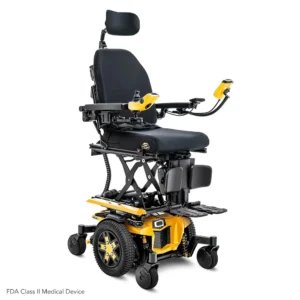
When someone doesn’t have much upper body strength left to work with, a power wheelchair often becomes the better option.
A few things they typically offer:
Control through a joystick, head movement, or even a phone app
Seating that’s customizable, plus built-in pressure relief for comfort
Occasionally, more advanced features the Scewo BRO, for instance, can climb stairs, and some models offer programmable support for weak trunk stability
For a lot of people, this is what actually gets independence back.
Reclining and Tilt-in-Space Chairs
Not everyone struggles with arm strength, some survivors have trouble simply staying balanced while seated. That’s where reclining and tilt-in-space chairs come in.
These let the backrest recline, or tilt the whole seat, which:
- Shifts pressure around and cuts the risk of sores
- Reduces fatigue over long stretches of sitting
- Helps maintain better posture generally
Key Features to Consider
A few things worth paying attention to while shopping:
- Adjustable armrests and footrests – makes transfers easier, accommodates different body positions
- Low seat height – useful for foot propulsion, especially with hemiplegia
- Ergonomic cushions and backrests – better posture, pressure spread more evenly, more comfort overall
- Lightweight, foldable frames – easier to store, easier to travel with
- Antibacterial or pressure-relieving cushions – protects skin, helps prevent sores
- Customization – one-hand drive systems, added accessories, adaptive controls
Don’t Go It Alone: Work with Professionals
Physical and occupational therapists know this territory well, and leaning on them is worth it. They’ll typically:
Point toward specific models or modifications that fit the person’s needs
Walk users through safe transfers, propulsion technique, basic upkeep
Check back in as recovery progresses and suggest changes or upgrades when needed
Skipping this step tends to cost more time and money in the long run — not less.
Practical Tips for Stroke Wheelchair Users and Families
Lock the brakes every single time before getting in or out — no exceptions
Swing the footrests away (or take them off) during transfers
Use a transfer board or gait belt when extra safety is needed
Rework the home a bit ramps, wider doorways, pathways clear of clutter
Stay on top of maintenance: tires, brakes, moving parts, checked regularly
Final Thoughts
Choosing a wheelchair for a stroke patient isn’t just about mobility. It’s about getting back a sense of confidence and freedom. Take time to explore the options. Talk to the professionals involved. Invest in the features that will actually matter day to day.
The road to recovery might be long — but the right wheelchair turns a lot of those obstacles into something more manageable.
Ready to find the right wheelchair for a stroke patient? Talk to Eclipse Mobility today and let us help you choose comfort, safety, and independence.
Find Your Perfect Wheelchair for Comfort & Mobility
FAQs
(1) How long does it take to regain movement after a stroke?
There’s no single timeline, it depends on the person. Some survivors notice movement coming back within weeks. For others, it takes months, sometimes years. Either way, a wheelchair often plays a key role in staying mobile through that whole stretch.
(2) How is a stroke wheelchair different from a regular wheelchair?
It usually comes down to hemiplegia-specific features, one-arm drive systems, lower seats built for foot propulsion, flip-back armrests for smoother transfers. Small design choices, but they change daily mobility quite a bit.
(3) Do all stroke patients need wheelchairs?
No, not everyone. But plenty of survivors use one, whether short-term during recovery or long-term depending on how their mobility settles. It helps with independence, cuts down fall risk, and just makes daily life more workable.
(4) Can stroke wheelchairs be customized?
Yes, ergonomic cushions, adjustable armrests, one-handed controls, pressure-relief seating, all of it can typically be added or adjusted. That customization is often what makes a chair genuinely usable over the long haul.