
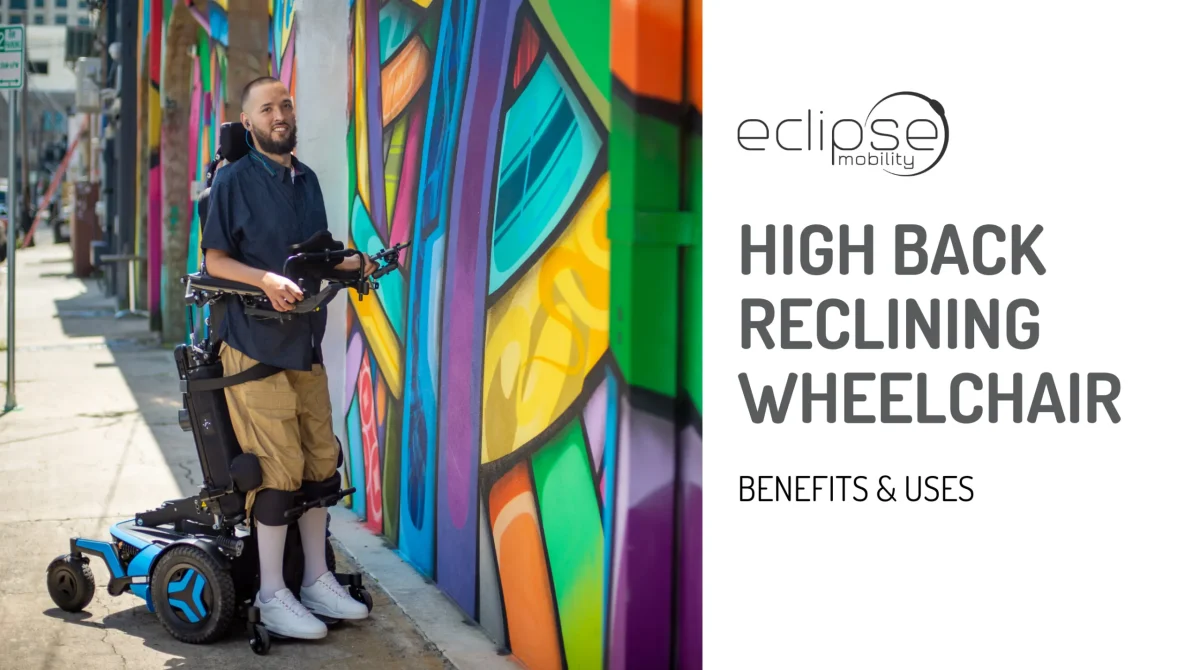
Quick Answer: A high back reclining wheelchair is built for people who can’t safely support their own head or trunk for long periods — think spinal cord injuries, ALS, cerebral palsy, or advancing muscular dystrophy. The extended backrest and adjustable recline redistribute pressure, support the airway, and let a caregiver reposition someone without a full transfer.
Not every wheelchair user needs the same kind of support. Someone who sits upright with good trunk control does fine in a standard chair. But when a person loses head or trunk stability — from a spinal cord injury, a progressive neuromuscular disease, or a condition present from birth — a high back reclining wheelchair stops being a comfort upgrade and becomes a medical necessity. The extended backrest supports the shoulders and neck, while the recline function shifts weight off the tailbone and hips at set intervals throughout the day. If you’re trying to figure out whether this is the right category for your situation, Eclipse’s Complex Rehab Technology services start with exactly that kind of assessment.
Who Needs a High Back Reclining Wheelchair?
The clearest candidates are people with limited or no independent head control — a high back wheelchair with head support is often the deciding feature, not an add-on. This includes individuals with high-level spinal cord injuries, advanced ALS, muscular dystrophy, or cerebral palsy with significant trunk involvement. It also includes people recovering from a stroke with one-sided weakness severe enough to affect sitting balance. In each case, the goal is the same: keep the airway open, keep the spine aligned, and prevent the head from falling forward or to the side during the day. Eclipse’s guide on wheelchairs and independence for people with ALS walks through how these needs typically progress.
Why the Reclining Feature Matters?
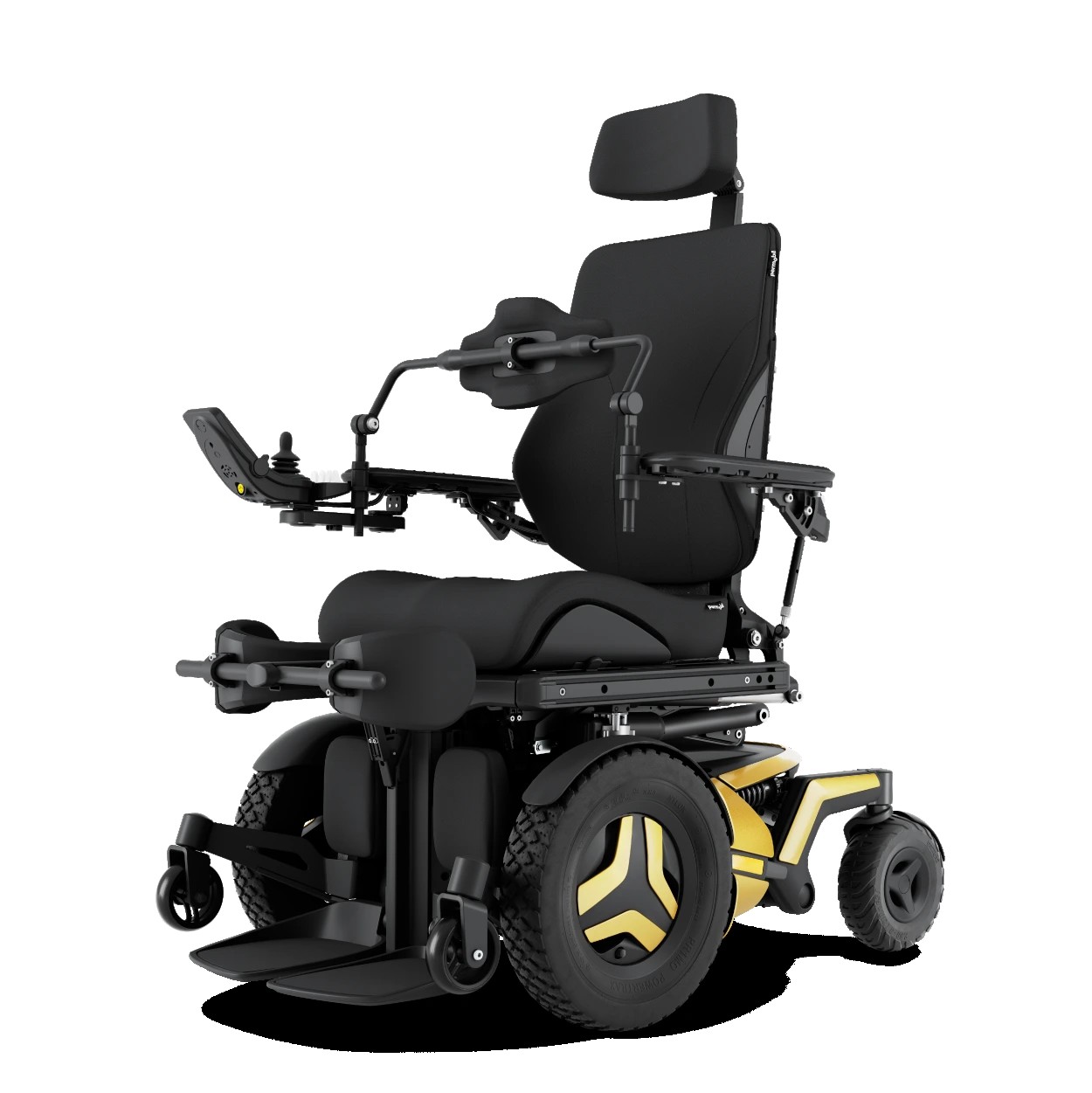
A reclining high back wheelchair does more than tilt backward — it opens the hip angle while keeping the seat and back connected, which is different from a tilt-in-space system that keeps the angle fixed and moves the whole seat. Recline is particularly useful for repositioning during personal care, managing orthostatic hypotension, or giving a caregiver a way to shift pressure off the sacrum without a full transfer. If you’re weighing recline against tilt-in-space, Eclipse’s breakdown of tilt-in-space wheelchairs explains when each one is the better fit — and a custom seating consultation through Eclipse’s customized power wheelchair program can settle the question for your specific body and diagnosis.
Can a Reclining Wheelchair Help Prevent Pressure Sores?
One of the most overlooked reasons families end up here is skin protection. A person who can’t shift their own weight is at real risk of pressure sores, especially over the sacrum and shoulder blades. Scheduled recline breaks up sustained pressure the same way standing up periodically does for someone without mobility limits. Eclipse’s work on custom seating for skin health and independence is built specifically around this problem, pairing the right cushion with the right recline range instead of treating them as separate decisions.
Can a High Back Reclining Wheelchair Improve Daily Comfort?
Comfort isn’t just about feeling better—it directly affects how long someone can safely remain seated. People with limited mobility often spend many hours in their wheelchair every day. Without proper support, they may experience neck fatigue, lower back pain, shoulder strain, and poor posture.
A high back reclining wheelchair distributes body weight more evenly across the backrest instead of concentrating pressure on a few areas. When paired with an appropriate pressure-relieving cushion, it helps reduce discomfort during meals, work, travel, medical appointments, and social activities. Many users also find that being able to recline throughout the day reduces muscle stiffness and makes it easier to stay seated for longer periods without pain.
Does Reclining Wheelchair Help with Breathing and Digestion?
For people managing respiratory weakness — common in ALS, muscular dystrophy, and some spinal cord injuries — a reclined position can also make breathing and swallowing easier by opening the chest and reducing strain on accessory breathing muscles. This is one reason a generic recliner add-on rarely works as well as a chair built around the person from the start. Eclipse’s power chair options, including the Permobil F5 and Quantum Edge 3, both offer power recline paired with head and lateral trunk supports engineered for exactly this kind of need.
How Do You Get Fitted and Get Insurance to Cover It?
None of this works well off a shelf. A proper fitting involves an occupational or physical therapist, a CRT supplier, and — in most cases — insurance approval, since these chairs are considered durable for medical equipment. Eclipse’s insurance options page covers what Medicare and private insurers typically require, and their Get Started process walks you through assessment, documentation, and delivery from the first call. If you want to see how this plays out for real families, the Eclipse case studies page has several detailed examples worth reading before you commit to a specific setup. When in doubt, reach out directly — a short conversation usually clarifies more than another hour of research.
Take the Next Step Toward Better Mobility
Frequently Asked Questions
Q: What is a high back reclining wheelchair?
A: It’s a wheelchair with an extended backrest that supports the shoulders and neck, combined with a recline function that adjusts the backrest angle for pressure relief and repositioning.
Q: How is a high back reclining wheelchair different from a tilt-in-space wheelchair?
A: Recline opens the angle between the seat and backrest while keeping the seat base fixed; tilt-in-space moves the entire seating system as one unit, keeping the hip angle constant. Each suit different postural and medical needs.
Q: Does a high back wheelchair with head support help with breathing?
A: In many cases, yes. Reclining and supporting the head and neck can reduce strain on accessory breathing muscles, which matters for conditions like ALS and muscular dystrophy.
Q: Will insurance cover a reclining high back wheelchair?
A: Often, yes, when a qualified therapist documents medical necessity. Coverage details vary by plan, so checking with a CRT supplier and your insurer early in the process avoids delays.
Q: How long does it take to get fitted for one?
A: From initial assessment to delivery, the process typically takes a few weeks to a couple of months, depending on insurance approval timelines and any custom fabrication needed.