
Quick Answer: The best portable wheelchair is one that balances battery range, weight, and turning radius with your actual daily terrain — not just the lightest model on paper. A true portable power wheelchair, like a mid-wheel drive Quantum Edge chair, should fit through a standard doorway, break down or fold for transport, and still carry enough battery for a full day away from home.
What Makes a Power Wheelchair “Portable” in the First Place?
A portable power wheelchair isn’t defined by size alone. It’s defined by how easily it moves between your home, your vehicle, and the world outside without losing performance.
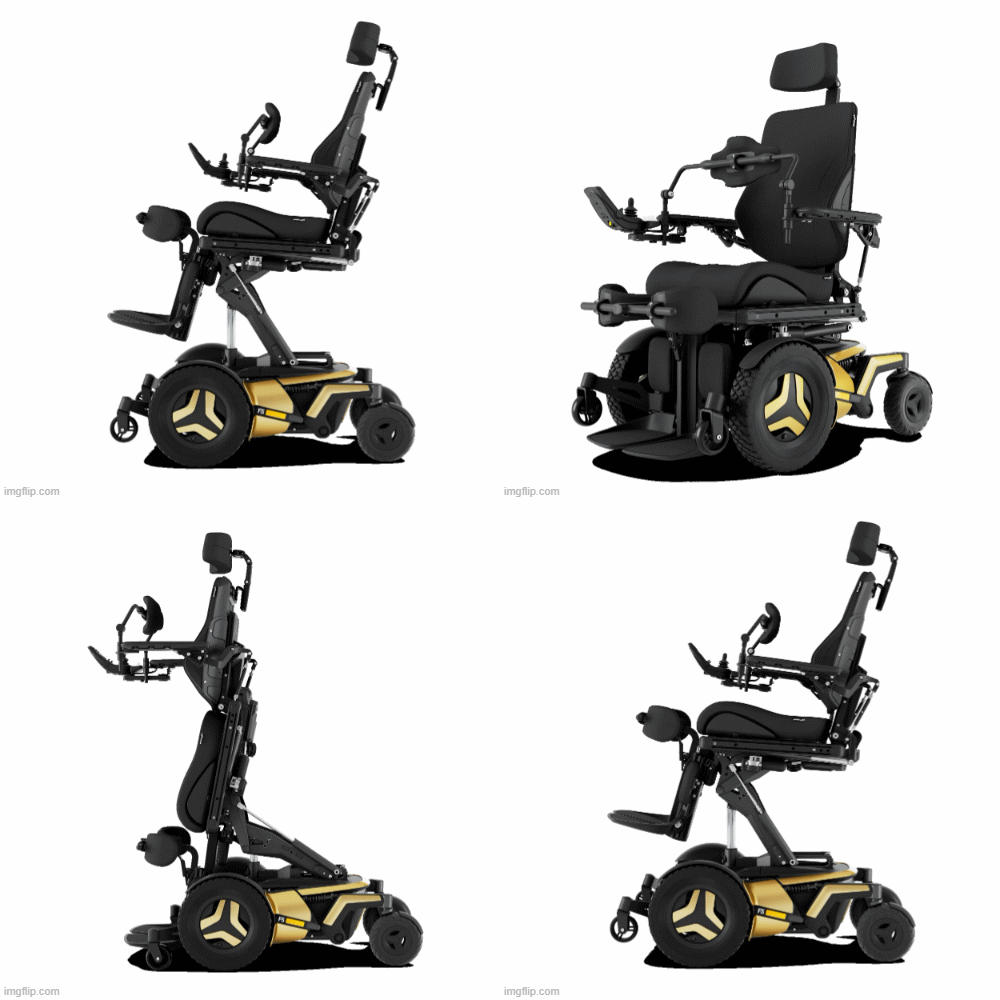
That usually comes down to three things: a compact frame, a battery that survives a full day, and a base that can be disassembled or driven onto a ramp without a struggle. A mid-wheel drive quantum power chair is a good example — it’s built with a tight turning radius for hallways and kitchens, yet it still handles sidewalks and curb cuts outdoors. That dual capability is really what “portable” means in this category, and it’s a distinction our complex rehab technology specialists walk through with every client during an evaluation.
Why Does Choosing the Best Portable Wheelchair Matter So Much?
Here’s the thing most people miss: the wrong chair doesn’t just feel uncomfortable, it quietly limits where you’re willing to go. A power wheelchair that’s too wide for your bathroom door or too heavy to load without help will get used less over time, even if it was the “better” chair on the spec sheet.
Getting this decision right also affects your relationship with your medical team. Occupational and physical therapists document functional needs — reach, transfers, endurance — and that documentation shapes what insurance is willing to cover. A portable power wheelchair chosen for real-world use, not just showroom features, tends to hold up better through that entire approval and delivery process, which is exactly why Eclipse Mobility starts every case with an in-depth service assessment before recommending a specific model.
What Should You Look For in a Portable Power Wheelchair?
Not every “compact” wheelchair is actually practical for daily transport. Before comparing specific chairs, it helps to know which specs actually change your day-to-day experience.
- Overall width and turning radius — determines whether the chair clears your narrowest doorway
- Battery range — anything under 15 miles per charge can feel limiting for errands or travel days
- Weight with and without batteries — matters if the chair needs to be lifted into a vehicle
- Drive type — mid-wheel drive chairs turn tighter indoors; front-wheel drive handles curbs and uneven ground better
- Transport certification — some frames are crash-tested for vehicle transport, others are not
- Seating adjustability — tilt, recline, and elevating leg rests affect comfort on longer outings
A certified provider like Eclipse Mobility walk through each of these variables against your actual routine — not a generic checklist — which is the difference between a chair that gets used daily and one that ends up parked in a corner.
How Do Popular Portable and Compact Power Wheelchairs Compare?
Different chairs solve different portability problems. Some are built for tight indoor spaces, others for rugged outdoor terrain, and one option below isn’t powered at all but folds down for easy transport when a lighter setup makes more sense.
| Wheelchair | Best For | Top Speed | Range | Weight Capacity |
| Quantum Edge 4 | Tight indoor spaces + daily community use | Up to 6 mph | Up to 20 miles | Up to 300 lbs |
| Quantum Edge 3 | Reliable daily driving with proven mid-wheel handling | Up to 5.5 mph | Up to 18 miles | Up to 300 lbs |
| Permobil M3 | Users needing advanced power seating in a compact base | Up to 6.5 mph | Up to 20 miles | Up to 300 lbs |
| Track Master S2 | Outdoor terrain: grass, gravel, snow | Up to 3 mph (terrain-limited) | 10+ miles | Up to 300 lbs |
| Helio A7 (manual, folding) | Lightest option for vehicle transport | N/A (self-propelled) | N/A | Up to 265 lbs |
This is a general comparison, and exact figures vary by seating configuration and battery upgrade. If you want the specifications matched to your body measurements and doorway widths, that’s exactly what a free consultation is for.
Portable Power Wheelchair vs. Manual Travel Wheelchair: Which Is Right for You?
This comparison comes up constantly, and honestly, there’s no universally correct answer — it depends on your upper body strength, your energy levels throughout the day, and how far you typically travel.
A portable power wheelchair like the Quantum Edge 4 removes physical strain almost entirely, which matters for anyone managing fatigue-related conditions or limited hand function. A manual folding chair like the Helio A7 trades that motorized convenience for a lighter, simpler frame that folds into most trunks without a ramp or lift. In our experience working with clients across Utah through Eclipse Mobility’s fitting process, people with variable energy — good days and hard days — often benefit from owning both, using the power chair for longer outings and the manual chair for quick trips.
How Does Insurance Cover a Portable Power Wheelchair?
Medicare, Medicaid, and most private insurers will cover a power wheelchair when a licensed provider documents medical necessity — but coverage details, deductibles, and pre-authorization timelines vary a lot by plan.
In most cases, the process starts with a face-to-face mobility evaluation, moves through documentation from your physician or therapist, then goes to your insurer for pre-authorization before the chair is ordered. This works well when your provider handles the paperwork directly, but it can break down fast if the supplier isn’t experienced with your specific plan. Eclipse Mobility’s insurance options page outlines which plans are commonly supported, and our team manages the authorization process directly with your insurer so you’re not stuck chasing forms.
How Do You Get Fitted for the Right Portable Power Wheelchair?
A portable power wheelchair should be fitted, not just purchased. Seat width, depth, backrest height, and footrest position all affect posture, skin health, and how well the chair performs once it leaves the showroom.
Picture this: you order a chair online based on specs alone, and it arrives with a seat depth that’s an inch too long — now your knees sit wrong, and every outing is uncomfortable. That’s avoidable. Eclipse Mobility’s team works directly with your occupational or physical therapist during the assessment and customization process, fitting the frame, seating, and controls to your body before the chair is ever finalized. You can see how that process plays out in real situations through our client case studies.
Take the Next Step Toward Better Mobility
Frequently Asked Questions
Q: What is a portable power wheelchair?
A: A portable power wheelchair is a battery-powered mobility device built with a compact frame, tight turning radius, and transportable design, so it can move easily between home, vehicle, and outdoor settings without sacrificing daily performance.
Q: How much does a portable power wheelchair typically weigh?
A: Compact power wheelchairs usually weigh between 250 and 350 lbs including batteries, while manual folding alternatives like the Helio A7 weigh significantly less since they carry no motor or battery pack.
Q: What’s the difference between a portable power wheelchair and a travel scooter? A: A power wheelchair offers more precise seating, posture support, and indoor maneuverability, while a travel scooter is typically built for outdoor distance and shorter-term use rather than all-day seating needs.
Q: Is a portable power wheelchair covered by insurance?
A: In most cases, yes — Medicare, Medicaid, and many private insurers cover power wheelchairs with proper medical documentation and pre-authorization, which Eclipse Mobility helps manage its insurance support process.
Q: How long does it take to get a custom-fitted portable power wheelchair?
A: Timelines vary by insurer and documentation speed, but the process generally spans several weeks from initial evaluation to delivery, covering assessment, insurance approval, ordering, and final fitting.
Q: Can a portable power wheelchair handle outdoor terrain?
A: Mid-wheel drive models like the Quantum Edge 4 handle sidewalks and light outdoor terrain well, but for grass, gravel, or snow, a rugged option like the Track Master S2 is better suited.
Choosing With Confidence, Not Guesswork
The best portable wheelchair for you isn’t the one with the flashiest spec sheet — it’s the one matched to your doorways, your daily distance, and your body. That match only happens through a real evaluation, not a product listing.
If you’re ready to compare options against your actual home and lifestyle, schedule a consultation with Eclipse Mobility and our team will guide you from assessment through delivery.