
Quick Answer: Walking gets harder for a lot of people with Friedreich’s ataxia balance, coordination, and strength all take a hit over time, and that makes school, work, or even simple daily tasks feel exhausting. This is where a customized wheelchair really helps. Whether it’s power mobility, better seating, or tilt options, the right setup saves energy, supports posture, and gives people back a real sense of independence. Kids get around school on their own with a pediatric power wheelchair, and even those who need respiratory equipment can have a setup that’s both safe and workable. Get a proper professional assessment, and the result is a mobility solution actually built around the person their body, their routine, their life.

Friedreich’s ataxia tends to make everyday movement harder as time goes on. Balance, coordination, muscle strength, endurance any of these can shift how easily someone walks or gets around, whether that’s at home, school, or out in public. A wheelchair, for a lot of people, ends up being more than just transportation. Done right, it supports posture, saves energy, adds comfort, and makes the day-to-day just easier to manage.
A wheelchair for Friedreich Ataxia gets built around the person their mobility, their seating and posture needs, their strength, how they actually spend their day. Depending on age and physical condition, that might mean power mobility, specialized seating, tilt functions, or a mix of other features.
What Is a Wheelchair for Friedreich Ataxia?
Friedreich’s ataxia is a rare, inherited condition that gradually affects the nervous system, leading to a loss of coordination, balance, and muscle strength over time. It often affects the spinal cord, nerves, and the part of the brain that controls movement, which is why walking and daily mobility tend to get harder as the condition progresses.
It’s mobility equipment picked specifically to deal with the challenges Friedreich’s ataxia brings. And because those challenges look different from one person to the next, there’s really no standard setup that works across the board.
A wheelchair assessment usually looks at:
(1) Current walking and transfer ability
(2) Balance, strength, coordination
(3) Sitting posture and trunk control
(4) Whether the person can operate power controls
(5) The home, school, or work environment
(6) Transportation needs
(7) Daily routines and personal goals
(8) Need for repositioning or pressure management
None of this is really about making someone stop walking. It’s about giving them another option for when walking gets tiring, risky, or just doesn’t make sense over longer distances.
How Can a Wheelchair Improve Mobility With Friedreich’s Ataxia?
Balance and coordination problems make getting around genuinely hard work. Someone might manage fine over a short distance but still struggle crossing a big school building, a busy workplace, or a shopping center.
That’s where a wheelchair earns its keep it covers ground far more efficiently. Power mobility especially helps once pushing a manual wheelchair becomes too much, whether that’s from reduced strength or coordination issues.
With a power wheelchair, a joystick or other access method puts the person in control of their own movement. Moving between rooms, reaching different areas, joining in on activities all of it gets easier, and there’s less need to rely on someone else just to get from A to B.
The chair also has to be something the individual can actually operate comfortably. That’s why a seating and mobility professional should assess strength, coordination, posture, and range of motion before recommending a setup.
Can a Pediatric Power Wheelchair Help Children With Friedreich’s Ataxia?
Kids don’t have the same mobility needs as adults. Their equipment has to work for right now, but also keep pace with growth, schooling, transportation, and needs that are constantly shifting.
A pediatric power wheelchair gives a child powered mobility when walking is hard, tiring, or unsafe. Depending on what that child needs specifically, the chair might come with adjustable seating, supportive positioning, programmable driving controls whatever helps them move independently.
There’s a participation piece here too. With the right powered mobility, a child can move around school on their own, join classroom activities, hang out with classmates, and get to different areas without needing an adult for every single move.
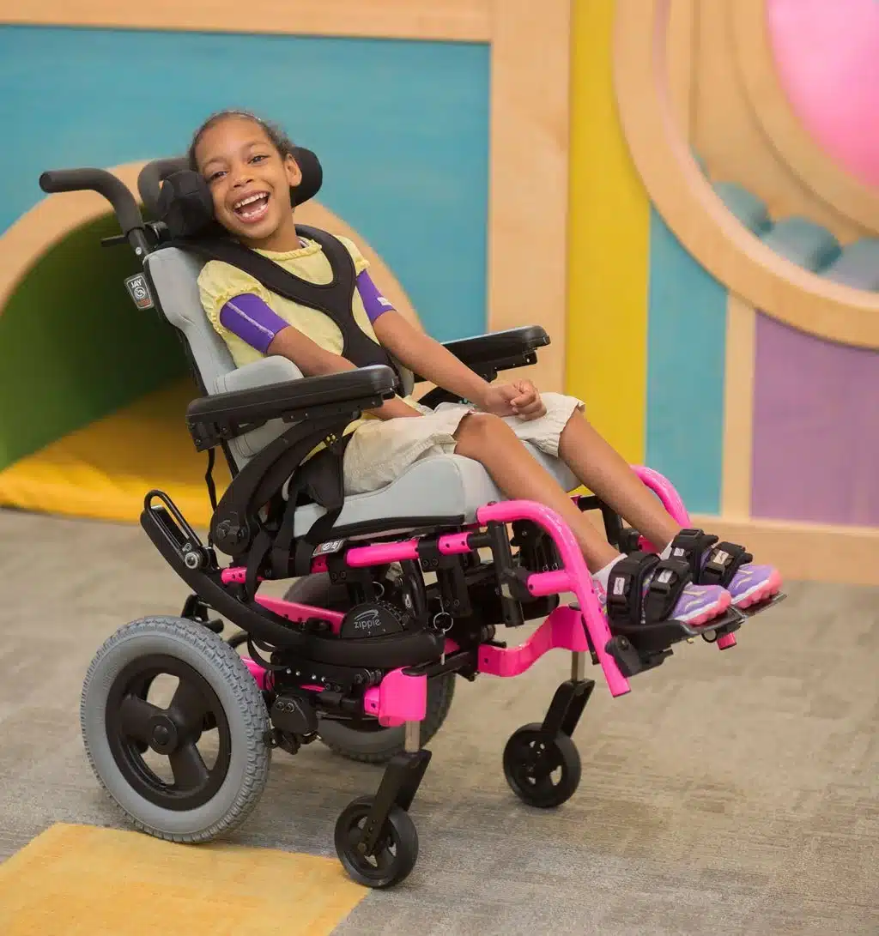
Families and professionals choosing a pediatric power wheelchair tend to weigh things like:
(1) Size, and how much growth to expect
(2) Sitting balance and postural support
(3) Ability to work the controls
(4) What the school and classroom actually require
(5) Home accessibility
(6) Transportation
(7) Daily activities
(8) Room to adjust and customize down the line
Kids change fast, so regular reassessment isn’t optional, it’s necessary.
How Can Proper Seating Improve Posture and Comfort?
Mobility is only half the story. Seating and positioning matter just as much for how well the wheelchair actually works for the person using it.
When trunk control or coordination is limited, someone can slowly slump into a position with no real support and that makes it harder to use their arms, run a joystick, reach for things, or just get through the day.
A properly fitted seating system supports the pelvis, trunk, legs, and head as needed. Seat width and depth, back support, cushion choice, positioning components all of it should be built around that individual’s body and function.
Get the positioning right, and someone can hold a more stable seated position, reach controls more easily, stay comfortable through long stretches of sitting, and handle daily tasks with less help from others.
No two people need the same thing here, so wheelchair seating really can’t be one-size-fits-all.
What Is a Tilt in Space Wheelchair and How Can It Help?
Tilt in space changes the angle of the entire seating system seat and back move together, keeping the same relative position. That’s different from just reclining the backrest.
It’s useful for people who spend long hours in the chair and need to shift position now and then. It can also help with comfort and pressure management for those who can’t easily reposition on their own.
Depending on the person, tilt might help with:
(1) Changing position through the day
(2) Pressure management
(3) Sitting comfort
(4) Postural stability
(5) Less need for manual repositioning
(6) Making some care tasks easier
That said tilt in space isn’t a given for everyone with Friedreich’s ataxia. Whether it’s appropriate, and how much positioning support is actually needed, is a call for a qualified seating professional.
How Can Wheelchair Use Help With Energy Conservation?
When balance, coordination, and strength are all compromised, walking just costs more. And energy spent getting around is energy that isn’t going toward school, work, hobbies, socializing, or taking care of yourself.
A wheelchair steps in as an alternative once walking stops being efficient that doesn’t mean giving it up entirely, though.
Plenty of people walk short distances when it makes sense, then switch to powered mobility for longer stretches. It’s about picking whichever method fits the activity and the setting.
That’s really why energy conservation matters so much when weighing whether a wheelchair could improve someone’s independence day to day.
Can a Wheelchair Accommodate Respiratory Equipment?
Some people also need respiratory support, and when that’s the case, the wheelchair has to be built around that equipment too its size, weight, where it sits, how accessible it is.
Depending on the medical need, that could mean oxygen systems, ventilatory support, or other prescribed devices. Since this varies so much person to person, the wheelchair needs to be looked at as one complete system, not just a chair with something attached.
Key things to think through:
(1) Where the equipment sits, safely
(2) Total weight capacity of the wheelchair
(3) Battery and power needs
(4) Easy access to the equipment
(5) Transportation
(6) Stability of the whole setup
(7) Emergency access
When respiratory equipment’s involved, the seating and mobility team needs to be in close contact with the person’s healthcare providers to make sure everything works together safely.
How Should Families Choose the Right Wheelchair?
Picking a wheelchair because it looks good or has one standout feature rarely works out long-term. The starting point should always be the person’s actual mobility needs and how they spend their day.
A professional assessment typically covers mobility, posture, strength, range of motion, home accessibility, transportation, school or work demands, and how things might change down the line.
It helps to ask:
(1) How far can they comfortably walk?
(2) When does walking start getting difficult or tiring?
(3) Can they safely handle power controls?
(4) How much postural support do they need?
(5) How many hours a day will the chair actually get used?
(6) Would tilt or other power seating features help?
(7) Does it need to accommodate medical equipment?
(8) How will it get transported?
(9) Can it be adjusted as needs change?
Working through questions like these keeps the whole assessment focused on what actually matters.
Why Is Customization Important for Long-Term Mobility?
Needs change over time, which is exactly why adjustability matters so much in a wheelchair. What works today might not work in a year.
Customization covers seating dimensions, cushions, back supports, foot positioning, joystick placement, control settings, power seating functions the list goes on. For kids, it matters even more, since growth alone can throw off how a chair fits.
Regular reassessment catches these shifts early. A seating system that no longer fits right can hurt comfort, posture, and how well someone can actually use the chair.
The whole point is a mobility system that works with the person their body, their abilities, their environment, their daily life.
How Can the Right Wheelchair Support Greater Independence?
Independence isn’t just doing everything solo. It’s also having the tools to make your own choices, move freely, and actually take part in life.
A well-matched wheelchair for Friedreich Ataxia gives someone real control over how and where they move. Powered mobility makes it easier to get through a home, workplace, school, or community without leaning on someone else for every move.
For kids, a pediatric power wheelchair opens up participation at school and socially. For people who need extra positioning support, tilt in space offers useful repositioning and comfort. And when medical needs are part of the picture, good planning folds respiratory equipment into the setup without a fight.
The right combination of features should always come from what the person actually needs not just whichever chair has the most add-ons.
What Should You Consider Before Choosing Mobility Equipment?
A good mobility solution does more than move someone from place to place. It should fit their body, their environment, their physical abilities, and where they’re headed long-term.
Worth thinking through beforehand:
(1) Mobility and walking ability
(2) Seating and positioning needs
(3) How much the chair will get used day to day
(4) Access to power controls
(5) Home and community accessibility
(6) Transportation
(7) Growth or changing needs
(8) Medical equipment requirements
(9) Maintenance and future adjustments
A professional seating and mobility evaluation brings all of this together to land on the right configuration.
Conclusion
A wheelchair for Friedreich Ataxia is capable of a lot more than just getting someone from one place to another. Set up right, it supports mobility, posture, comfort, energy conservation, and everyday participation. A pediatric power wheelchair helps kids move with more independence; a tilt in space wheelchair gives people who need it more options for repositioning and comfort. For anyone relying on respiratory equipment, careful planning helps that fit into the mobility system without becoming a burden. At the end of the day, it comes down to a professional assessment and a setup built around the individual one that meets their needs now while leaving room for whatever changes come next.
Find the Right Mobility Setup for Your Needs
Frequently Asked Questions
Does getting a wheelchair mean someone has to stop walking completely?
Not at all. Think of it as another tool, not a replacement. A lot of people still walk short distances when it’s safe to do so and lean on the wheelchair when a longer distance or a tiring situation calls for it.
At what stage of Friedreich’s ataxia should someone consider a wheelchair?
Honestly, there’s no set point where this becomes “necessary.” It comes down to the person their balance, coordination, strength, and how much those things are getting in the way day to day. A seating and mobility professional is really the one who can look at all that and say whether a wheelchair would help with mobility, safety, or just saving energy.
What’s the difference between a manual and a power wheelchair for someone with Friedreich’s ataxia?
A manual chair needs to be pushed by the user or someone helping them which gets hard fast if strength or coordination isn’t there. A power wheelchair sidesteps that problem entirely: a joystick or similar control lets the person move on their own with a lot less physical effort. As coordination and strength decline, power mobility tends to make more sense.
How often should a wheelchair be reassessed once it’s fitted?
More often than people expect. Kids especially need this since they’re still growing, but adults aren’t exempt either Friedreich’s ataxia can progress, and a setup that felt right a year ago might not fit as well now. Checking in regularly keeps posture, comfort, and function from slipping.
Can a wheelchair be customized later if a person’s needs change?
Yes, and that’s kind of the point of building one properly in the first place. Seating dimensions, cushions, back supports, control settings, power seating functions most of it can be adjusted down the line as mobility, posture, or medical needs shift.