Quick Answer: Standing too long, walking to the mailbox, even getting through a normal day, if EDS or POTS makes any of this exhausting or painful, a wheelchair built for your specific symptoms can actually change that. Some people do fine with a lightweight manual chair. Others need something more, like a power wheelchair with tilt, recline, and real joint support. Eclipse Mobility helps you figure out which one fits, sorts out the insurance side, and sets you up with a personalized fitting. Reach out and let’s get you moving with less pain.

Living with Ehlers-Danlos Syndrome (EDS) and Postural Orthostatic Tachycardia Syndrome (POTS) can turn ordinary tasks into daily battles. For a lot of people, standing or walking for any length of time brings real pain sometimes it just isn’t possible at all. This is where the right wheelchair starts to matter.
If you’re dealing with EDS, POTS, or both, fatigue, joint pain, dizziness, and low muscle strength probably sound familiar. A manual wheelchair isn’t always the answer. If pushing the wheels yourself makes things worse, it might be time to look elsewhere. So in this blog, let’s go through what actually matters when picking a wheelchair that fits your health and the way you live day to day.
Mobility struggles with EDS and POTS often build up slowly, so it’s easy to push through discomfort for months before considering a wheelchair at all. Many people wait longer than they need to, worried that using one means giving something up, when really it can mean getting more of your day back.
When Is a Wheelchair Needed for EDS or POTS?
EDS affects connective tissue throughout the body. That can mean frequent joint dislocations, weak muscles, and pain that doesn’t really go away. POTS works differently, it causes your heart rate to spike the moment you stand, and that can leave you dizzy, lightheaded, or just wiped out. Between the two, walking or staying on your feet for long can become genuinely hard.
You might want to think about a wheelchair if:
Fatigue hits fast, even during small tasks. Your heart races the second you stand up. Walking makes joint pain worse, or leads to dislocations. A past surgery left your core or muscles weaker than they used to be.
If any of that sounds like your daily life, a wheelchair can be a safer way to get around.
Should You Choose a Manual or Power Wheelchair?
There are really two paths here: manual wheelchairs, and power wheelchairs like the Quantum Edge 3.
(A) Manual Wheelchairs
You push these by hand. They’re light, they fold up, and they’re easy to store almost anywhere. The problem for people with EDS or POTS is that pushing can strain the joints or drain your energy fast. Still, if your arms are strong and flare-ups aren’t a constant issue, a custom wheelchair made from ultra-lightweight materials can work out just fine.
Best for: People who still have decent upper body strength Short-term or occasional use
(B) Power Wheelchairs
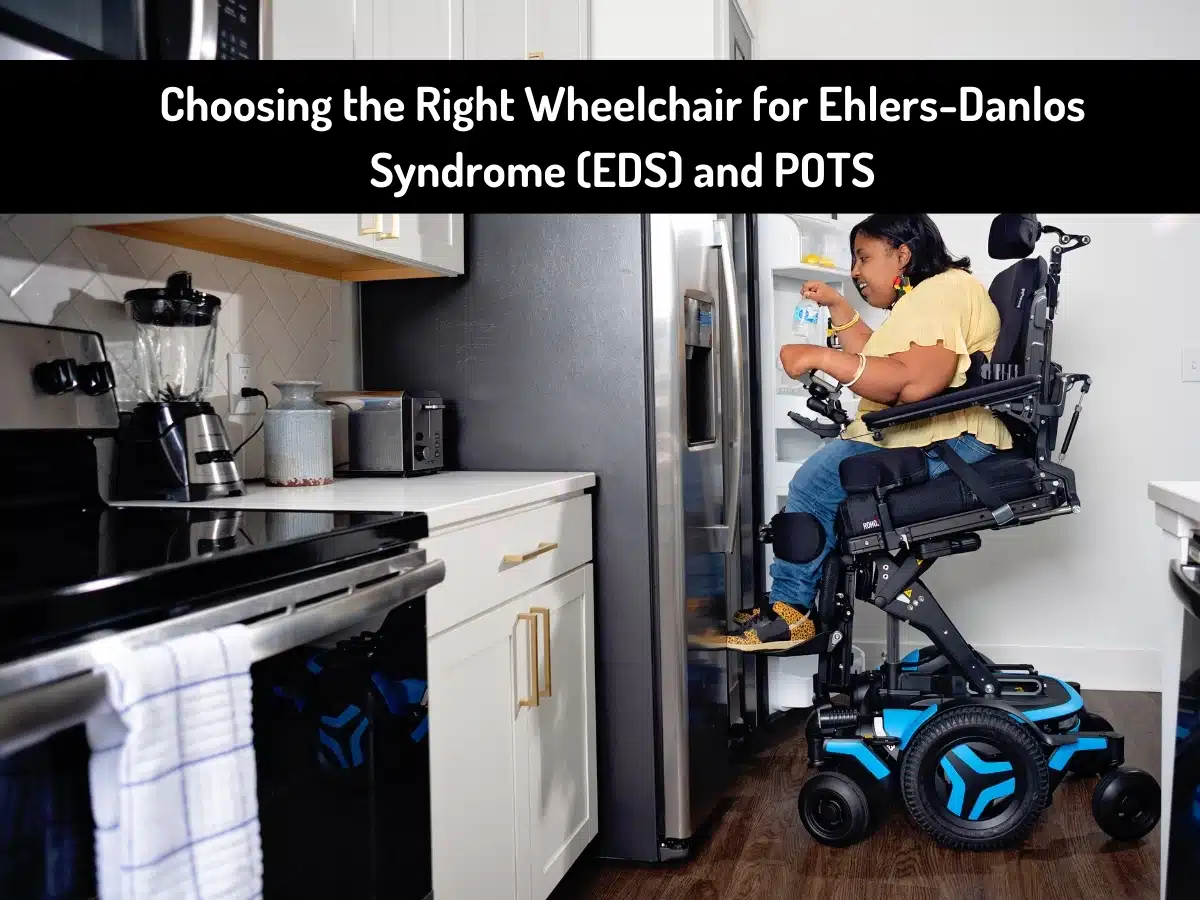
Power wheelchairs are sometimes called electric wheelchairs run on a motor and steer with a joystick. For anyone dealing with low strength, heavy fatigue, or a weak core, these tend to be the better call. Had abdominal surgery? Does a manual chair seem to make things worse instead of better? A power wheelchair is probably the smarter route.
These chairs save energy and cut down on unnecessary pain. A lot of people with EDS and POTS use them specifically to dodge flare-ups while still getting around.
Benefits include Much less physical effort required Can cover longer distances without wearing you out Easy to handle indoors and outdoors alike.
What Custom Features Should You Look for in an EDS or POTS Wheelchair?
No two wheelchairs need to be the same. A custom EDS wheelchair can be built around exactly what you need. Some features worth asking your provider about:
Tilt or recline function helps manage blood pressure changes and dizziness from POTS. Adjustable seating protects joints and lowers the risk of dislocation. Padded cushions guards against pressure sores and just feels better. Elevating leg rests – cuts down on swelling in the legs and feet. Back and neck support matters a lot if fatigue or a weak core is part of your picture.
Finding a provider who actually understands EDS wheelchairs and POTS mobility aids can make a real difference in how comfortable and how healthy you feel day to day.

What Other POTS Mobility Aids Are Available?
Not everyone with POTS needs a wheelchair all the time. Some people get by with other POTS mobility aids instead a cane, a walker, a transport chair and keep a lightweight wheelchair around for the rougher days.
Pay attention to how you’re feeling. Some days are just better than others, and having more than one option on hand is what keeps you active without pushing too far.
Why Talk to a Wheelchair Specialist?
Picking the right wheelchair isn’t only about the wheels. It’s about actually living better with your condition. At Eclipse Mobility, we work with clients across Utah to find mobility solutions that fit their real lives.
We understand what EDS and POTS demand day to day. Whether you need a lightweight manual wheelchair, a fully custom power chair, or a hand navigating insurance, we’re here for it.
A good specialist will also factor in things that are easy to overlook, like how your symptoms change with the seasons, whether you’ll need to transport the chair in a car, or how your needs might shift over the next few years. That kind of long-term thinking is hard to get from a generic buying guide, which is exactly why the right conversation with the right person matters so much.
Conclusion
EDS and POTS bring real challenges, there’s no getting around that. But the right mobility aid can tip things in your favor. A custom wheelchair, an EDS wheelchair, a POTS wheelchair whatever fits, it can ease pain and open up more freedom in everyday life. Talk with your doctor and a wheelchair specialist to figure out what actually works for your situation.
A POTS syndrome wheelchair or EDS wheelchair does more than just get you from one place to another. It brings freedom. Comfort. Independence.
Take the first step toward better mobility, contact us today for a personalized wheelchair fitting designed for EDS and POTS.
Take the Next Step Toward Better Mobility
Frequently Asked Questions
Q1: What type of wheelchair is best for Ehlers-Danlos Syndrome (EDS)?
Usually a custom lightweight manual or power wheelchair with solid joint support and padding works best. Recline and tilt features help too they ease joint strain and add comfort.
Q2: Can people with POTS benefit from using a wheelchair?
Yes, definitely. A wheelchair, especially a power model, can help with fatigue and lower the risk of fainting, mainly by cutting down on time spent standing or walking.
Q3: How do I know if I need a manual or power wheelchair for EDS or POTS?
Honestly, it comes down to two things your strength, and how often you flare up. Decent arm strength, not too many bad days? A lightweight manual chair could be enough. But if pushing yourself around wipes you out, or surgery left your core weaker than it used to be, go with power. A wheelchair specialist can help you sort out which one actually works for your day-to-day.
Q4: Will insurance cover a custom wheelchair for EDS or POTS?
Often, yes. It usually comes down to whether a doctor documents that the chair is medically necessary. That said, every plan is different, and coverage can vary quite a bit depending on your provider. Best move is to talk to a specialist first they can walk you through the paperwork before you commit to anything.
Q5: Can I switch between a manual wheelchair and a power wheelchair depending on the day?
Sure, and a lot of people with EDS or POTS actually do this. Some days are easier than others, so a lightweight manual chair works fine then on the harder days, a power wheelchair takes over. It’s a practical way to stay mobile without pushing yourself too far. Talk to a specialist if you’re not sure whether this setup would work for you.