

Watching your spouse struggle with everyday tasks is hard. It’s really hard. You might notice they’re moving slower. Or they’re tired all the time. Maybe they’re in pain when they walk.
These are signs. And they matter.
If you’re wondering whether your spouse might need a wheelchair, you’re not alone. Lots of people ask this question. The truth? There’s no single “right time.” But there are definitely signs you can watch for.

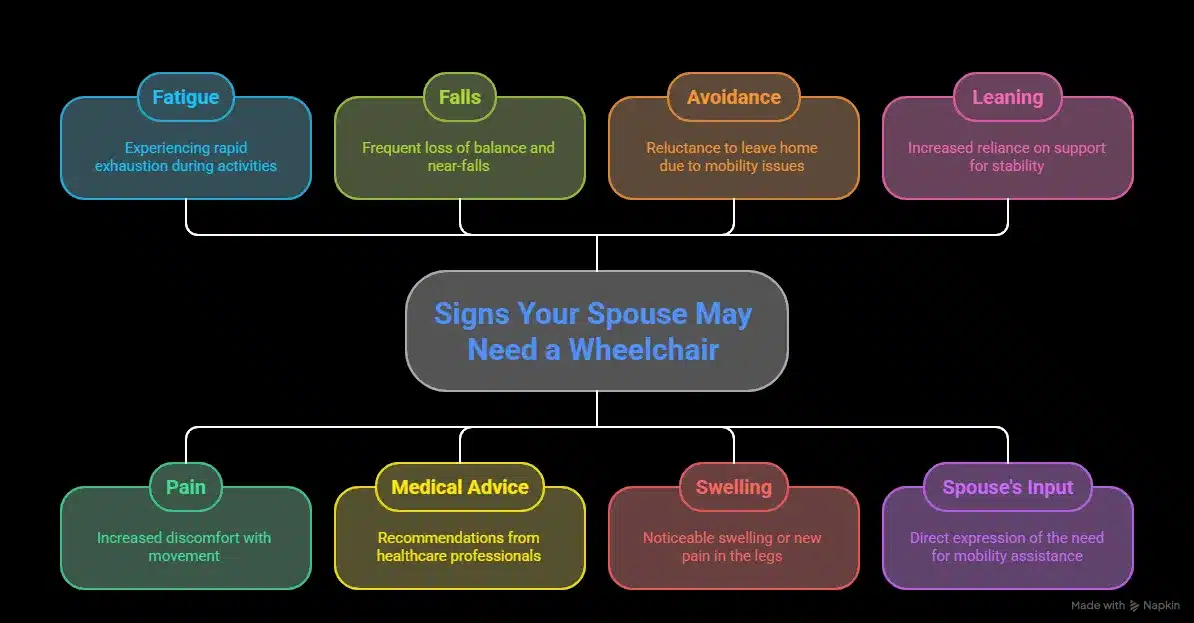
Signs Your Spouse May Need a Wheelchair
1. They’re Getting Tired Way Too Fast
This is often the first clue. Your spouse used to walk around the grocery store no problem. Now they need to sit down halfway through. Or they can’t make it from the car to the house without stopping.
This exhaustion isn’t laziness. It’s real. Whether it’s from arthritis, heart problems, or just getting older, your body sometimes needs help. A wheelchair can actually give them more freedom. Not less. They can do more things because they’re not wiped out.
2. Pain is Getting Worse
If standing or walking hurts more each day, that’s worth paying attention to. Your spouse shouldn’t have to choose between moving around and being in pain.
Sometimes a custom wheelchair can help. The right fit and support can actually reduce pain. It’s not giving up. It’s being smart about your health.
3.They’re Falling or Almost Falling
This is serious. If your spouse is unsteady, losing their balance, or nearly falling regularly, they need help. Falls can cause major injuries. A wheelchair or power wheelchairs options can keep them safer while they still get out and do things.
4.Doctors Say So
Your spouse’s doctor should be part of this conversation. If their physical therapist or doctor mentions mobility issues? Listen. They’re seeing what you might not see. They know how seating and mobility work together for health.
Don’t ignore medical advice. Doctors aren’t trying to take away independence. They’re trying to protect it.
4.They’re Avoiding Going Out
Notice your spouse staying home more? Making excuses not to go places? That’s often because moving around is too hard or too painful.
A good lightweight wheelchair solution could change that. Suddenly they can go to dinner again. Visit grandkids. Enjoy life. That’s huge.
5.Their Legs Are Swelling or They Have New Pain
Swelling in the legs, new numbness, or sudden changes in pain patterns? These aren’t small things. They might mean your spouse’s body needs different support.
6.They’re Leaning On Things More
Holding onto walls. Grabbing your arm constantly. Using a cane but still wobbling. These are signs their legs aren’t giving them what they need anymore.
A mobility wheelchair isn’t the same as giving up on walking. Many people use wheelchairs part-time. They walk at home. They use the wheelchair when they go out. It’s about having options.
7.They Mention It First
Sometimes your spouse brings it up before you do. They might say something like, “I wish I could go places again” or “I’m tired of being stuck at home.”
Listen to that. Your spouse knows their body. If they’re thinking about a wheelchair, they’ve probably been thinking about it for a while.
Making the Decision Together
Here’s the thing about wheelchairs: they’re not punishment. They’re tools. Like glasses help you see, a wheelchair helps you move.
Talk to your spouse about how they’re feeling. Don’t just decide for them. Ask questions:
- Are you tired of missing things?
- Is pain stopping you from doing what you want?
- Would getting out more make you happy?
Then talk to their doctor. Explore your options. Look at different types of wheelchairs. Some are manual. Some are power wheelchairs that do the work for you. Some are lightweight wheelchair models that are easier to transport.
For people with special needs wheelchair requirements, there are customized options too. Every body is different. Every need is different.
Why This Actually Helps
I know it sounds scary. But here’s what really happens: your spouse gets their life back. They can go to the movies. Spend time with family. Travel. Do things they love.
Yes, it’s a change. But it’s often a positive one.
Choosing the Best Wheelchair for Your Needs
Choosing the Best Wheelchair for Your Needs
Not all wheelchairs are the same. That’s why finding the right one matters so much.
Think about what your spouse actually does.
Do they need to move around the house a lot? Then a lightweight wheelchair might be perfect. Easy to move. Easy to transport.
Do they get tired fast? Power wheelchairs let them go farther without wearing out. Does your spouse have unique needs?
A custom wheelchair can be built just for them. The right seating and mobility setup can make all the difference in comfort and safety.
Here in Utah, we have wheelchair specialists who know this stuff inside and out. They’ll talk to you and your spouse. They’ll ask real questions. Then they’ll find the solution that actually works for your situation. Not some generic option. Something real.
The best wheelchair is the one your spouse will actually use. The one that fits their body. Matches their lifestyle. And gives them the freedom to keep living.
Starting the Conversation
Don’t wait until things get really bad. If you’re reading this, you already sense something’s changing. That’s your sign to start talking.
Be kind. Be patient. Your spouse might feel sad or embarrassed. That’s normal. Let them feel that. Then help them see the possibilities.
A wheelchair isn’t an ending. It’s sometimes a new beginning. It’s your spouse saying, “I’m going to keep living my life. I’m just going to do it differently.”
And honestly? That’s pretty brave.
If you’re noticing these signs, talk to your doctor. Get expert advice. Explore your options. Your spouse deserves to live fully. Whatever that looks like for them.
FAQs
1: When should my spouse actually start using a wheelchair?
There’s no magic age or timeline. It’s about quality of life. If your spouse is avoiding activities because moving around is hard or painful, that’s a good sign they could benefit. Talk to their doctor. A power wheelchair or lightweight wheelchair can help them do more, not less. Many people use wheelchairs part-time. They walk at home but use a wheelchair when going out. The right mobility wheelchair gives them freedom back.
2: What’s the difference between a custom wheelchair and a regular one?
A custom wheelchair is built specifically for your spouse’s body and needs. Regular wheelchairs are one-size-fits-most. Custom options mean better comfort, better support, and better seating and mobility for their unique situation. If your spouse has special needs or pain in specific areas, a custom wheelchair can make a huge difference. It costs a bit more upfront, but it’s worth it when your spouse is actually comfortable and can use it every day.
3: How do I know if a power wheelchair or manual wheelchair is right for my spouse?
Ask yourself: Does your spouse have the arm and upper body strength to push a manual wheelchair? Do they get tired easily? If yes to tired and no to strength, a power wheelchair is probably better. They’ll go farther and stay independent. If your spouse is strong and doesn’t mind the physical work, a manual or lightweight wheelchair might work great.