
So you’re thinking about getting a power chair or a mobility scooter, maybe for yourself, maybe for a parent or grandparent and you’re not really sure where to start. That’s completely normal. A lot of people come to us with the same question: “What’s the difference, and which one should I get?”
Honestly, it’s not a one-size-fits-all answer. The right choice depends on your daily routine, your physical condition, where you live, and how you plan to use it. Let’s break it all down in a way that actually makes sense.
First, Let’s Talk About What These Are
Before diving into comparisons, it helps to understand what we’re actually talking about.
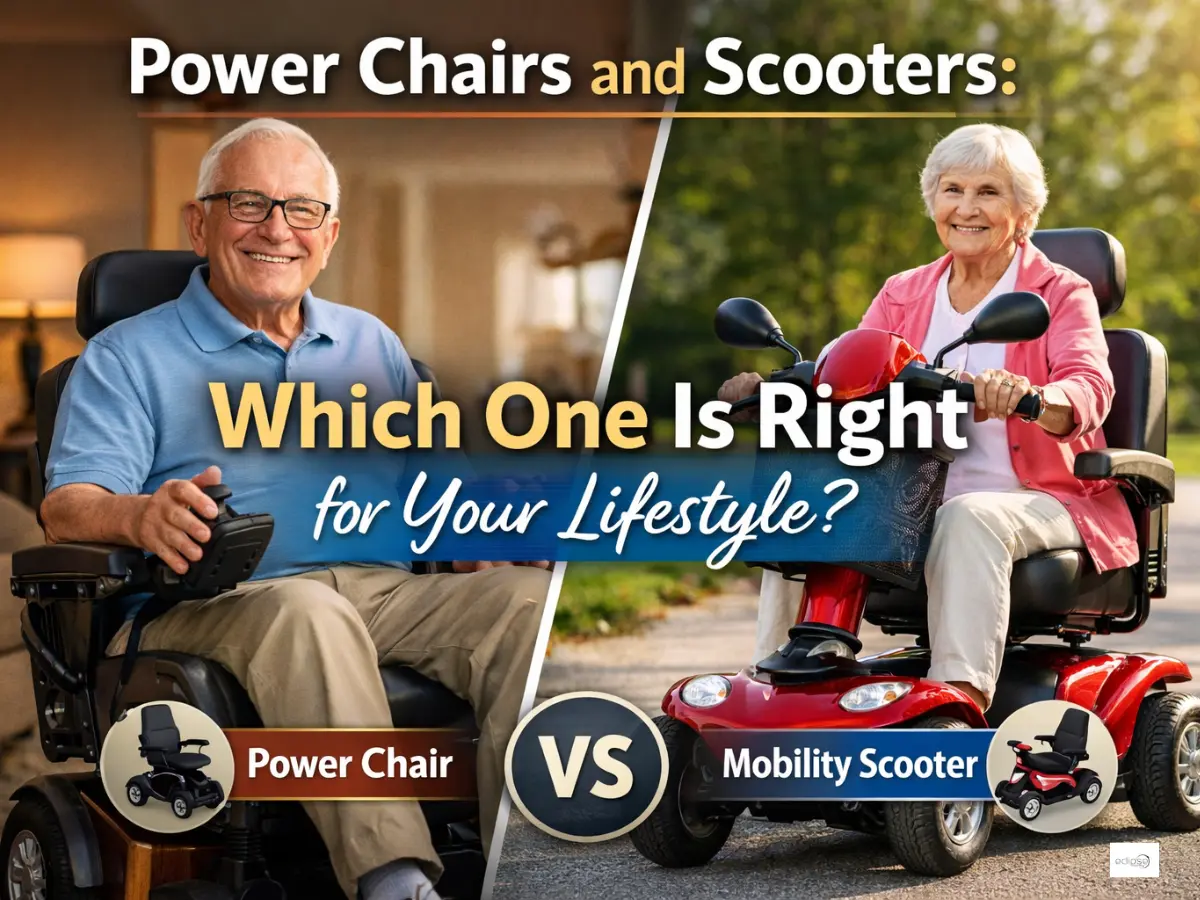
Power chairs, also called power electric wheelchairs, are motorized chairs designed to provide maximum support and control. They’re built for people who need full-time assistance with mobility, whether that’s due to limited upper body strength, balance issues, or conditions like MS, ALS, or severe arthritis. You control them with a joystick, usually mounted on the armrest, and they’re designed to be used both indoors and outdoors.
Mobility scooters, especially the best mobility scooters for seniors, look more like a scooter you’d ride at a theme park. You sit upright, steer with handlebars, and they’re typically used by people who can walk short distances but struggle with anything longer. They’re perfect for grocery runs, neighborhood outings, or getting around large spaces like malls or airports.
Both fall under the umbrella of power chairs and scooters, but they serve different purposes. Choosing the wrong one can actually make your life harder, not easier, so let’s make sure that doesn’t happen.
Who Should Consider a Mobility Scooter?
If you’re a senior who’s still relatively mobile but gets worn out quickly, a scooter might be your best friend. Electric scooters for elderly users are designed to give you independence without requiring someone to push you around or help you constantly.
Here’s the kind of person who typically does well with a mobility scooter. You can stand up and sit down on your own, or with minimal help. You have decent upper body strength and can handle the steering column. You mostly need help over longer distances, think shopping, outdoor events, or community outings. You want something that feels less “medical” and more like a personal vehicle.
In Utah, where many seniors love staying active outdoors, whether that’s visiting parks, local farmers markets, or just getting around their neighborhoods, a scooter can be a fantastic way to stay in the mix without overdoing it physically. The terrain varies here, so if you’re in a hillier area, you’ll want to look at scooters with stronger motors and better traction.
The best mobility scooters for seniors usually offer comfortable seating, easy-to-use controls, solid battery life, and a weight capacity that fits the user. Some are foldable for easy transport in a car trunk, which is a huge plus if you’re someone who travels or visits family frequently.
Who Should Consider a Power Chair?
Power chairs are a different story. These are for people who need more substantial, full-time support. If walking, even short distances, is painful, unsafe, or simply not possible, a power chair gives you the freedom to move through your world without depending on someone else every minute of the day.
Some situations where a power chair makes more sense than a scooter. You have limited hand or arm strength and need specialized controls. You spend most of your day seated and need something that supports your posture and body properly. You navigate tight indoor spaces frequently because power chairs are generally more maneuverable in small areas. Your condition is progressive and you need equipment that can grow with your needs.
When it comes to power chairs and scooters, power chairs tend to be more customizable. You can adjust seating, footrests, armrests, and control systems to fit your exact needs. Some models even come with tilt and recline features, which is really important for people who deal with pressure sores or circulation issues.
Still unsure whether power chairs and scooters are right for you?
Comparing the Two Side by Side
Let’s get practical for a second.
Ease of use is something worth thinking about. Scooters are generally easier to get on and off of, while power chairs require less physical effort to operate once you’re seated.
For indoor use, power chairs tend to win. Their turning radius is tighter, which makes navigating hallways, bathrooms, and furniture much easier.
For outdoor use, scooters often handle outdoor terrain better, especially three or four-wheel models built for it. That said, many modern power chairs handle outdoor surfaces just fine too.
Portability is another big difference. Scooters, especially folding models, are easier to transport. Most power chairs are heavier and require a vehicle lift or ramp.
Cost can vary widely depending on features, but in general, basic scooters tend to be less expensive. More advanced electric scooters for elderly users and power chairs with custom features can both get into higher price ranges.
Insurance coverage is a big one that a lot of people overlook. In many cases, Medicare and Medicaid may cover power chairs if prescribed by a doctor and deemed medically necessary. Coverage for scooters can be trickier. If you’re in Utah and navigating insurance options, it’s worth talking to a specialist who knows the local and federal coverage landscape well.

A Few Things People Often Overlook
One thing a lot of people don’t think about until it’s too late is their home setup. Before you commit to either a power chair or a scooter, walk through your house and think about doorway widths, flooring types, whether you have stairs, and where you’d charge the device.
Also consider your lifestyle outside the home. Are you frequently in large stores or medical facilities? Do you travel by car often? Do you live somewhere with harsh winters? Because if you’re in northern Utah, ice and snow are real factors when it comes to outdoor mobility equipment.
Another thing worth thinking about is the emotional side of this decision. A lot of people resist getting a mobility device because it feels like giving up. But here’s a different way to look at it. The right equipment gives you more freedom, not less. It means you can go places, see people, and do things you’d otherwise have to skip. That’s not giving up. That’s making smart choices so you can keep living life on your own terms.
Our Services Can Help You Figure This Out
We know this decision isn’t simple, and we don’t expect you to figure it out alone. That’s exactly why we’re here. Whether you’re just starting to explore your options or you’ve already done your research and are ready to make a move, our team can walk you through everything, from understanding the difference between power chairs and scooters to finding the best fit for your body, home, and daily routine.
Our organization provides services to elderly people and disabled individuals throughout Utah. We take pride in our work because we ensure that every person we serve receives their required equipment instead of letting them choose from our available products. The insurance discussion will lead to model testing which will help you decide after you receive all the necessary information.
The goal isn’t just to sell you a scooter or a chair. It’s to help you move through your life more freely. And that’s something worth taking seriously.
The Bottom Line
If you’re still on the fence, here’s the short version. Go with a scooter if you’re fairly mobile and mostly need help with longer distances. Go with a power chair if you need full-time support, have limited upper body strength, or deal with a more serious mobility condition.
And if you’re still not sure? Come talk to us. We’ll help you figure it out.
FAQs
Q1: What’s the main difference between power chairs and scooters?
Power chairs are designed for full-time mobility support with more customizable seating and controls, while mobility scooters are better suited for people who can still walk short distances but need help over longer ones.
Q3: What are the best mobility scooters for seniors who travel often?
Folding or travel scooters are ideal for seniors who are frequently on the go. They’re lightweight, easy to store in a car trunk, and simple to assemble without tools.
Q4: Can electric scooters for elderly users handle outdoor terrain?
Yes, many electric scooters for elderly users are built for outdoor use with larger wheels, better suspension, and stronger motors. If you live in an area with uneven sidewalks or hills, like parts of Utah, look for a model specifically rated for outdoor terrain.
Q5: How do I know if a power chair is right for me?
If you have limited upper body strength, difficulty with balance, or a condition that affects your ability to walk or sit upright without support, a power chair is likely a better fit than a scooter. A mobility specialist can assess your specific needs and recommend the right option.
Q6: How long does the battery last on a typical mobility scooter or power chair?
Most devices offer a range of 10 to 25 miles on a full charge, depending on the model, terrain, and user weight. It’s important to charge your device regularly and avoid running the battery completely flat to extend its lifespan.